Issue 99: Ground Rules

I’ve been spending some time this week planning next term’s lessons.

I’ll be teaching class music, recorders, small group samba, small group theory and also Wider Opportunities samba, djembe, ukulele and keyboard next year in addition to private piano and theory lessons. In other words the usual chop and change about, no day the same as any other. I’m not complaining – this is one of the things that I love about my work!

Every year, the first two lessons on every class teaching plan begin with the heading “Ground Rules“, no matter what the class, instrument, or age group.

It’s pretty straightforward. I can sum it up as “Don’t play your instrument, or talk, when I’m talking”. That’s a pretty bald and global statement, but in my experience it is easier to have just one or two hard-and-fast rules (“fast” in the sense of “stuck fast” rather than “swift”!). Easier for the children to remember, and easier for me.

For any instrumental class work to be a pleasure and a success, the children have to learn how to play their instruments AND how to NOT play their instruments, whatever they are. So we practise the basic skills:

  • putting the instrument down quietly and safely
  • picking up the instrument quietly, without starting to play it
  • holding the instrument quietly without playing it
  • stopping playing on a signal (I use various signals in different circumstances. The most useful one is raising my hand without saying anything, and the children are expected to stop playing as soon as they notice)

This need not be boring, if you make a game of starting and stopping. Or you can appeal to their naturally competitive natures. Put the children into groups, and reward the group that is most successful each time – maybe they get some kind of merit point, maybe they get extra playing time, maybe they get to give the signal next time.

I good game is passing various instruments round the circle without making a sound. Tambourines, shakers, and bells-on-sticks are good choices to provide a challenge.

The sooner you get these skills embedded into the class behaviour, the better, for everyone’s enjoyment for the rest of the school year!

branch divider


Posted in The organised teacher | Tagged | Leave a comment

Issue 98: Welcome to The Jungle

Summer time – heat – slowing down – time off – taking it easy

All these things are true of this week, which is why it is Tuesday and The Jungle has only just arrived. So, apologies if you are one of the subscribers who receive this on your Kindle. I’ll add in this quotation for free as a bonus…

“The mathematical sciences particularly exhibit order, symmetry and limitations; and these are the greatest forms of the beautiful”    Aristotle

I reckon you could swap the words “musical arts” for “mathematical sciences” and it would still hold true.

This week I have started a regime of serious technical practising to try and regain the fluency and facility that has seeped away through several months of very irregular playing. I’m also planning to visit Leith Hill Place sometime soon, and I have been fiddling about with my Kindle. And you can read all about it now!

Poppy divider

Posted in The Jungle | Leave a comment

Issue 98: Music on my Kindle

I have had a Kindle for several years now, and have occasionally toyed with the idea with finding out how to make it play background music while I’m reading.

The first thing to bear in mind is that mine is an old-style keyboard Kindle; one of these: 

so if yours is newer, you may have to press different buttons to make it start and stop playing.

Here’s what you do – it is so simple I don’t know why I didn’t try this a long time ago. Using the USB connection, you plug your Kindle into your PC. Find the “music” folder (or is it a directory? It’s pretty obvious) in the Kindle, and copy and paste your favourite mp3 tracks. Finito. That’s it.

Aha, there must be more to it than that, I hear you say. Well, yes. The ONLY control you have is to start and stop playing, and to skip forward one track. I press ALT and space bar, which toggles between play and pause. It plays through the tracks in the order in which you copied them in. If you want to listen to a track that is way down the list, you have to keep doing ALT and f until you get there.

Sound quality ain’t great – it’s only a tiny speaker – but is improved by using headphones. There you go.

Poppy divider

Posted in Listening Music, The Jungle | Tagged | Leave a comment

Issue 98: Meeting up with Old Friends

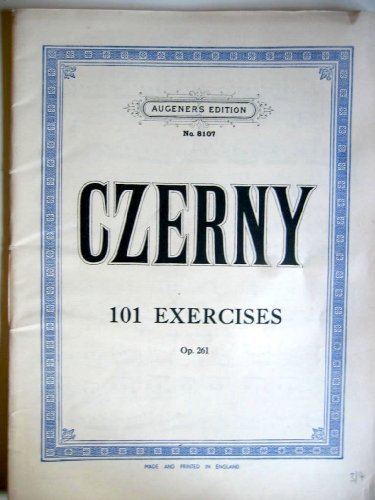
Yesterday I spent some time and had afternoon tea with an old friend. We were introduced by my first “real” piano teacher way back when I was about fourteen or fifteen years old, and we’ve kept in touch ever since:


I expect he is considered rather old-fashioned now. I find it is a useful set of studies which are quick and easy to learn, and provide a good way in to developing the kind of technique you need for Mozart, Clementi and similar styles of playing. My teacher very sensibly selected just the most effective parts of the studies, focussing on left or right hand most of the time, rather than hands together. So that’s what I do when I’m teaching them. Interspersed with the technical studies (and most are only a couple of lines long) are short pieces “in the scherzo style” or “for developing the rondino style”.


This morning I shared a coffee with another good friend: Oscar Beringer.


He is quite a different character. We met in the music room of my mother’s piano teacher, a contemporary of my piano teacher (one was a student at “the Academy”, and the other was at “the College”. Both won prizes while they were students, and went on to have professional performing careers).

Tuneful he is NOT. However he is very thorough, and it is thanks to him that I am completely fluent in every major and minor key! I listened to another teacher working with a young pupil – it was on a television programme about Cheethams School of Music – and teaching him these exercises. “If you are  not in the mood, just don’t bother doing them,” he said. There’s no point unless you are going to do it properly”. All too true. One thing that today showed me is that although I have got legato and finger staccato touches pretty well sorted, my wrist staccato NEEDS WORK.


I was thinking of looking up my third good friend good friend in the next day or so. He has been a great help in the past, but is altogether rather too demanding and intense for my mood at the moment.

 Poppy divider


Posted in Piano, Practising | Tagged | Leave a comment

Issue 98: Leith Hill Place

A friend reminded me that Leith Hill Place in Surrey is now open to the public for the Summer and Autumn, before it undergoes restoration. It is a National Trust property and you can get full details here.

To quote from the web page

“An imposing house with stunning views over the South Downs, Leith Hill Place was once home to the Wedgwood family and composer Ralph Vaughan Williams, and visited frequently by Charles Darwin.”

There are various events planned, including a concert and some folk song recitals. It looks a stunning place to visit.

Poppy divider

Posted in The Jungle, Uncategorized | Tagged , | Leave a comment

Issue 97: Welcome to the Jungle

All the posts this week have been inspired by our end-of-term staff meeting of a few days ago.

so, we have…

inclusiveness

making a samba kit from junk

“Hey!” and “Ho!” a pulse and rhythm game

there you go! Have a great week…

Kangaroo

Kangaroo


Posted in The Jungle | Leave a comment

Issue 97: Inclusiveness

We had our final staff meeting of the school year earlier this week, which included a presentation from a couple of people from Nordoff Robbins, the music therapy charity.

This was a very useful session, with lots of food for thought on how to make our music lessons more inclusive for pupils with special needs. In my own teaching career I have encountered children with dyspraxia, dyslexia, ADHT, Downs syndrome, autistism and Aspergers conditions, and physical, or hearing, or mobility issues. Sometimes I have known about this before the first lesson; other times I have found out literally “the hard way” – hard for pupil, hard for me, and certainly hard for creating a good start in developing our relationship in future lessons.

I vividly remember my very first ever day as a class music teacher, over ten years ago. It would have been so nice to have been told about the year 6 lad with only one arm before I had planned the lesson involving lots of clapping and body percussion activities, and definitely before I took issue with the way he wasn’t wearing his sweatshirt properly. Good grief! This happened in the 21st Century, not in “olden days”. I still can’t believe that no-one in the school thought it necessary to mention this rather crucial fact.

“There is always a reason for a child’s behaviour”. It is well worth taking a moment’s pause and reflecting on that statement as you try and cope with managing some of the more “challenging” children you come across. Before you decide upon your response, it is well worth trying to talk things through with the child, the class teacher, or the parents.

I’m not trying to be a music therapist in my class music lessons, or in the one-to-one piano lessons. I don’t have the experience or the training. But I hope that the music lessons are a place where every child can have space to develop their communication skills and social skills, and maybe ease their way through the complexities of the rest of their day.

Kangaroo

Kangaroo

Posted in Learning, The organised teacher | Leave a comment

Issue 97: The Junk Samba Kit

Last summer I amused myself by creating a junk samba kit. I had bought a 15-player kit, but they are pretty expensive, so if I was going to teach a whole class samba I needed more instruments but at less cost.


I had a great time choosing different sized patio planters, making my own samba mallets, and sourcing “junk” equivalents for tamborims, and agogo bells.

I ended up with five “surdos” made from patio planters supported on tennis-ball feet, and 8 “tamborims” made from very cheap, shallow cake tins (89p each) and very cheap plastic beaters. The 4 “agogo bells” were slightly more expensive; enamel mugs and spoons raided from the kitchen drawer, and also 6 small baking dishes which should have been used for making individual quiches.

As mentioned last week, I already had around 30 shakers (ganzas) from small plastic drinks bottles with a spoonful of rice inside.

There are also about 15 pairs of claves (dowels, sawn to length and the edges rounded off).

junk samba kit

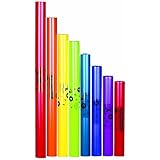
That takes me to around 62 instruments, give or take a few. Add to that number 8 “real” tambourines, 2 octaves of boomwhackers and 5 little wooden xylophones, and we are now at over 90 instruments. Product Details

tiger-xylophone


I have nowhere to keep them in the house, so they rattle about on the back seat of my car. I’m used to the racket now.

So, when the Nordoff-Robbins team asked how many of us had brought our instruments for the improvisation session that followed their presentation, and only half-a-dozen hands, from the 80+ group went up, catastrophe was averted!

My “real” samba kit was safely stowed away at home, but it only took minutes to shift all  the “junk” from my car to the conference room.

I would guess that my 90-player junk kit, gathered together over several years, cost me well under £80. The most expensive items were probably the xylophones (£5 each) and the boomwhackers (about £15 per set). I use instruments from this eclectic collection constantly, especially when visiting schools where the instrument cupboard is… well, the less said the better about the instrument cupboard.

With this lot in the back of the car, I reckon I am ready for anything! As I proved to my satisfaction last week!

Kangaroo

Kangaroo


Posted in Samba, The Jungle, The organised teacher, Uncategorized | Tagged , | Leave a comment