96/100 Boxing Day – St Stephen’s Day

I’m a couple of days late, I know, but today I finally got a chance to listen to this track which had been sitting in my in-box. It is a traditional folk song about St Stephen, who is remembered on the day after Christmas.

wassail-magpie-lane

This is the “folky” sort of sound that I love. The band is called Magpie Lane, the CD is Wassail – A Country Christ,as, and I’ll be putting it on my Christmas List for next year.

holly


Posted in Songs, The Jungle | Tagged | Leave a comment

95/100 Scales – Start at the top

Here’s a thing;

Suppose the brain is like a battery, that runs out of energy when it is used;

divasanddorks-battery-picture

When your student is playing a scale, especially if it is a new one, (and I’m talking piano here because that’s what I mainly teach), have you noticed that they may make it to the top, and even halfway back down again, but nearly always collapse, note-wise or finger-wise in the section.

Take a beginner playing a left-hand one-octave scale; up they go; 5 4 3 2 1 3 2 1 and down they come 1 2 3 4 5 “oh, I’ve run out of fingers”

contrary motion divider


Or right-hand D major; D E F# G A B C# D and back; C# B A G F E D – what happened to F~ on the way back?”

Hands together, two octaves – how often do they end up with an extra finger on the final note? Or missing a few sharps/flats towards the end?

I explain it to the students that they have used 70% of their “brain battery” getting to the top (which is the easier part) and have only 30% of their battery life to get down to the bottom (the harder part). So, if you were to start at the top, you would use 70% of your brain battery to get to the bottom (harder part) and 30% is probably enough to make it to the top.

Once I have taught a scale and the students know what they should be doing (even if they can’t do it) I always switch to “upside down” scales for a week so that they play the downward run while their brain is still functional, in order to consolidate RIGHT notes and fingerings instead of WRONG ones.

This seems to work, and if nothing else adds some variety!

holly

Posted in Learning, Practising | Tagged | Leave a comment

94/100 Memorization

A blog I follow is www.bulletproofmusician.com, written by Noa Kageyama.

I used to be a great natural memoriser. My first piano teacher used to insist on learning all piece hands separately, in minute detail, before putting the hands together, and somehow I just knew everything by heart without trying. Then, disaster; we moved to another part of the country and I changed teachers. I turned up to my second lesson with the set piece, Schubert Moment Musicaux no 1, and started playing the right hand. She stopped me – “hands together, please” – and I never memorised a piece again.

Except –  my aunt had an ancient copy of the Gliere Prelude in D flat, which I loved, but could not take away with me. This was in the days before scanners and photocopiers, so my only way of “having” this piece was to learn as much as I could in every visit, and somehow hang on to the memory until next time, maybe a month later. The trouble as, I didn’t know how to memorise. I would just go over and over a couple of bars until the notes seemed to “stick”.

less-confident-snake

Years later, in my twenties, I started piano lessons again with a teacher who insisted everything had to be memorised. This was a real challenge – Bach fugues, Beethoven sonatas, Chopin Etudes. At first I could only manage one or two bars in a week. Eventually I would painfully, step by step, manage maybe a couple of lines – but I still had no technique for memorisation apart from endless, relentless, repetition. I even tried learning a fugue starting at the last bar, adding preceding bars until I reached the beginning – it worked for me, but infuriated my teacher!

In the post “Why some musicians seem to be memorisation ‘naturals’ (and how to become more of one yourself)” he discusses memorisation.

I particularly like the idea of “performance cues” – Structural, Expressive (mood), Interpretative (elements such as dynamics, tempo, phrasing), and Basic (technical, like bowing, fingering, and I would add posture, using your eyes to prepare keyboard leaps). Deliberately learning and practising these cues is an effective way of improving learning and memorisation.

I wish I had known about this much earlier in. I now use many of these ideas in my own teaching and learning, and it makes a huge difference in getting to grips with a new piece.

holly

Posted in Keyboards, Learning | Tagged , | Leave a comment

93/100 A Term of Ukulele

I bet you aren’t doing any planning for next term at the moment! Neither am I; as I am going to teach this next term. It worked like a charm for a 10-week year 2 / 3 ukulele programme that I have just finished, so it should see me through at least the first half of the next term. I’ve not set it out in lessons, just as the material I used.

Aim; to teach open strings and the chords, Am7, C7, C, F and G7

Open strings; My Dog Has Fleas

Am7; Bee Bee Bumble Bee, Starlight, Star Bright, Leo the Lion,

C7; Engine, Engine number 9

C; A sailor went to Sea sea sea

C and C7; The telephone song

F; Ding dong, I got a rhythm in my head

F and C; Miss Mary Mack Mack Mack, Sambalele, My Hat it Has Three Corners

F, C and G7; I did Jingle Bells, but I’ll probably do Yellow Submarine this time. Or maybe 12 bar blues for a change.

I’ve done links to some of the songs, but if you search on them you will find other lesson ideas as well. Yellow Submarine you will have to find for yourselves (Copyright…)

Parrots singing "My hat it has three corners"


Posted in Ukulele | Tagged | Leave a comment

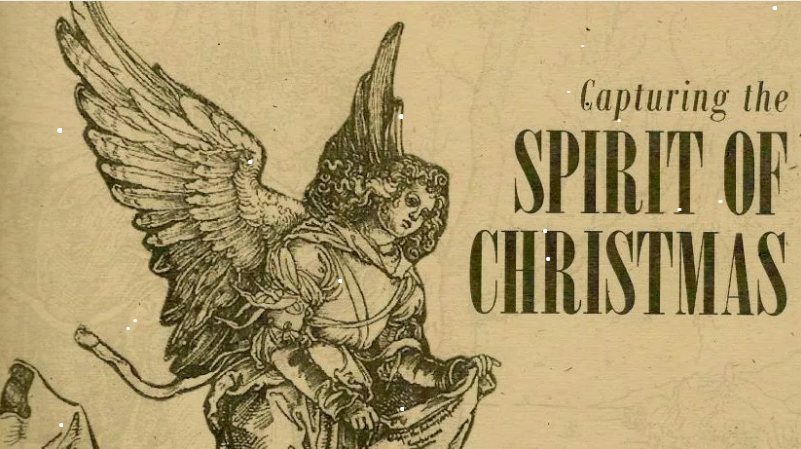
92/100 Another Christmas Collection for piano

I follow the website www.pianodao.com run by Andrew Earles. He has recently reviewed this collection of Christmas Carols for piano solo;

capturing-the-spirit-of-christmas


by Barbara Arens and Alison Mathews published by Editions Musica Ferrens. You can read his review here which also included a video of the composers playing the carols.  Well worth checking out…

holly

Posted in Piano | Tagged | Leave a comment

91/100 The Christmas Nativity – The Big Day

And it all went splendidly! It felt like a proper, informal, on-the-edge of chaos performance, and all the more enchanting for that. It had its “moments”, but whispered instructions from strategically placed staff at crucial moments prevented any major crises.

I was very pleased with my percussion band. We had had very few rehearsals as just the band. I had tried out a few ideas in the previous fortnight, but mainly relied on certain key children knowing what to do and the younger ones catching on fast.

In the end, I prepared eighteen cloth bags (I had no idea that I had accumulated so many over the years), each labelled with the child’s name. Inside, there was an order of service, with the parts for the songs or carols they were playing in clearly marked, and the instruments required. On the back of the label I listed the instruments that should be inside.

Each band member was responsible for collecting their bag before we walked up to the church, and making sure all the instruments were replaced and the bag put back afterwards. The children had to be fully independent, as I couldn’t see them and I was fully occupied watching the script and playing the songs at the right time on a keyboard balanced across the corner of a pew.

So, for example, in “We Three Kings”, I labelled each verse with the instrument that was accompanying it, and put a ring round the words in the chorus where the cymbal was to play. If someone was playing a woodblock in “Little Donkey”, the words “Wood block – rhythm – little donkey” was written against the song in their order or service. Likewise, the chimes had “8     8 8 7 6 5, 6765, 6765” written against the chorus in their copies.

This worked for “Calypso carol too, which we only had one rehearsal for; each child had two identical boomwhackers, and I ringed the words of the chorus for their letter. So GG would play for G chords, C chords and Eminor chords.

One of the reasons it worked so well is that we have done so much rhythm work over the past two terms, accompanying songs and creating different ostinato patterns. This means that the children are able to grasp and hold onto quite complex rhythms, and maintain a steady pulse.

I like to focus on rhythm and pulse in the first term of the year anyway, as it is such an important foundation for group music-making. It certainly made putting the band together much easier than it might have been.

Posted in Class Teaching, Lessons that have happened, Percussion | Tagged , | Leave a comment

90/100 Singing Hinny

Singing means just that – singing.  Hinny is a term of endearment for a young girl, from the North East of England where these  griddle cakes originate. They get the name from the sound of the fat sizzling on the griddle (I use a heavy non-stick frying pan) as you bake them.

I know, the connection to music teaching is a bit tenuous, but when you are in need of a bit of a change, and some plainer food over the Christmas Break, you could always try making a batch.

Here’s a picture, from the recipe page on the internet which you can find here; if you don’t want to use the traditional lard, use butter instead.

singing-hinny


Posted in The Jungle | Tagged | Leave a comment

89/100 Teach the fingers ‘cos they don’t know what to do

I had a hilarious keyboard lesson last week with a beginner, a lad of about ten who has been learning for a couple of terms but not making great progress.

He has been absolutely determined to be able to hack his way through Jingle Bells in time for his last Cub Scout meeting of the term, in order to get a badge. It has been a tough journey for him. A few weeks ago he still couldn’t reliably find C D E on the keyboard, far less apply fingers 1 2 3 in any coherent way or show any confidence in reading the music.

Then, this lesson, he suddenly “clicked”, and could play the whole of Jingle Bells. “Great!”, says I. “Now let’s add the Left Hand chords.” This should have been a fairly simple step – he has already used the chords C F and G, and the keyboard even has coloured spots on these notes in the bass!

very tired snake

Could he get his left hand little finger on the F, marked with a green spot, at the same time as playing the right hand F for the “Oh what fun it is” part of the melody? He could not.

“Oh no, I’ve got it wrong again” was an anguished refrain. “It’s like this,” I explained. ”

Fingers have NO Brains, and they don’t know what to do. You have to TELL them, like a teacher.” He thought about this, and then I heard him glaring at his left hand and saying “Put the pinky on the green spot” in a tone of authority. “And as for you, ” turning to his right hand ” you need to do  finger FOUR”. Having made that clear, he applied both the fingers to the keyboard, and it worked!

“Do it again, and again, until they have learned what to do” I advised.

“I can do it!” he cried out, after a few goes.

“Well, have a star for those fingers!”. To my amusement, he took me literally, and stuck a star on the relevant fingers. By the end of the lesson, his fingers were covered with stars (which I had left handily within reach) and he had worked through all the songs on his sheet, hands together, without  any help from me.

This all fits with my teaching mantra “To teach is to learn twice“. When I am learning a tricky something-or-other – in the middle of a four-part fugue, or a series of Rachmaninov chords full of accidentals and other weirdnesses, I actively instruct my fingers where to go, until I am sure that they’ve “got” their moves. If you don’t understand what you are trying to do, whatever it is, at whatever level, then you are going to find it very hard to succeed!

holly

Posted in Keyboards, Lessons that have happened | Tagged | Leave a comment