Issue 143: Grandma, Grandma – a complete samba lesson

The toughest class I teach at the moment is the very last one on a Friday afternoon.

It doesn’t really matter which class, age group, instrument – I’m beginning to think that the problem lies in the words “Friday Afternoon”. The children have had a whole week of learning, and by the time Friday comes they are more than ready for the weekend.

It used to be year 3 beginner recorders; three sessions back-to-back. Now it is year 6 samba, three sessions back-to-back. I plan the lesson with about 4 elements, and reckon to deliver all four to the first class, three to the second, and a couple to the third.

This week I did much better than usual, all thanks to Grandma.

Here’s the rap (traditional)

Grandma, Grandma, sick in bed, 
called for the doctor and the doctor said
Grandma, Grandma, you ain’t sick,
All you need is a walking stick!
 
Hands up, shaky shaky shaky shakety shake,
Hands down, shaky shaky shaky shakety shake,
Hands up, shaky shaky shaky shakety shake,
Hands down, shaky shaky shaky shakety shake,
To the front, to the back, to the s-s-side
 
She didn’t go to college,
She didn’t go to school,
I bet you five dollars
she can wriggle more than you.
 
Hands up etc
 

I taught the rap, and the class thoroughly approved of it – it has a lively sound and a good beat. You can do actions – make up your own, or get the children to suggest them.

Then, it became a samba. Surdos took the first line, tamborims the second, ganzas the third, agogo the fourth. “Hands up” was played by surdo each time, “shaky shaky” etc was ganza. The first “To the front” etc was tamborim, the second “To the front” etc was agogo. In verse two, the lines went round the groups as before, but watch out – they are much shorter.

The children clearly thought it would be a doddle, but it is actually quite trappy. Then you move everyone round to a new group. Heheheh. And, as they are sharing instruments one between two, you get them to swap with their partner after each line. Heheheheheh. Well, I didn’t get this far with the third class, but the first two classes certainly had a serious mental work out in my lesson.

Poppy divider

Posted in Samba | Tagged , , , | Leave a comment

Issue 143: More on that violin rehearsal


Last week I wrote about rehearsing a with violin exam candidate, and looking for the “meaning” of the piece (a Bach Adagio).

Well, funnily enough, a few days later I found myself going through the same piece of music with another candidate. He was also struggling to find any kind of understanding of the music. Now, he happens to be studying maths, and physics and all sorts of mathematical kinds of subjects, so I approached the problem differently. “Suppose it is a complex and beautiful mathematical proof, or maybe something to do with physics, which you can just about understand if you follow it very carefully – maybe something like this…”

An identity is a statement resembling an equation which is true for all possible values of the variable(s) it contains. Many identities are known, especially in trigonometry. Probably the best known example is: \sin^2(\theta)+\cos^2(\theta)=1,, which is true for all values of θ.

In the process of solving an equation, it is often useful to combine it with an identity to produce an equation which is more easily soluble. For example, to solve the equation:

3\sin(\theta) \cos(\theta)= 1, where θ is known to be between zero and 45 degrees,

use the identity: \sin(2 \theta)=2\sin(\theta) \cos(\theta), so the above equation becomes:

\frac{3}{2}\sin(2 \theta) = 1

Whence:

\theta = \frac{1}{2} \arcsin\left(\frac{2}{3}\right) \approx 20.9^\circ.
I’ve just copied and pasted that lot from with Wikipedia page on equations. I’m not pretending that I actually understand what it says (although, as I did Maths with Music as my degree, there was a time when I might have known what it meant!)
He thought about it, and then we played the piece again. I’m not sure what was going on in his head, but the music was now expressive, flowing, had a sense of journey and destination.
I’ve done the same kind of thing with a Baroque allegro – Vivaldi, maybe. For one student, we talked about a surprise opportunity to go to Paris for fashion week, with all the catwalk shows, and staying in a top class hotel. For another student, playing the same piece, we discussed a culture trip to Venice, visiting churches, museums, art galleries and so on. It’s just a case of knowing what will inspire, connect, enthuse each student.
Poppy divider 
Posted in Learning, Lessons that have happened | Tagged , | Leave a comment

Issue 142: Welcome to the Jungle

Welcome – or should I say “Welcome Back”?

I’ve had one thing after another through the whole of October, and updating the Music Jungle has been right at the back of the list. I guess that’s what happens in the Autumn Term – after a long Summer away from all the children, we go back into school and the sneezes and coughs (and Worse!) all start.

Anyway, half term has come, and is sadly just about over, but at least the break has given me a chance to get back on form again.


We spent a wonderful day in London. I particularly wanted to see the poppies at the Tower of London (so did the had been frozen in time. I guess that is part of the metaphor; all those people, including both my great-uncles, whose lives came to an abrupt halt.

And the sound of the “Last Post” is, for me, one of the most poignant elements of Remembrance Day services.

Poppy divider

Posted in The Jungle | Tagged , | Leave a comment

Issue 142: My most useful resource

Well, I expect there are plenty of other resources that would qualify for this title, depending on what I am doing at the time.

However, my bag of 35 small plastic bottles like these (I got them in apple, pear, apricot and mango flavours as well)

have proved their worth over and over again. Once I had consumed the contents, washed them out, and left them to dry, I put about a tablespoon of rice in each and screwed the lids down tight.

So far, I have never had a problem with the children opening them up and spilling the rice. I expect this is because I discuss the contents, and the fact that you can see the rice through the clear base beforehand. And maybe the threat that if they do spill the rice, then the lesson becomes “pick up all the rice” instead of music.

I use them for creating soundscapes (shaking gently, swirling, shaking hard, scratching thumbnail around the caps, taping the bases or the tops together), listen and copy, zum gally gally, or just keeping the pulse in time to music.

Brill. cheap(ish – for fruit drinks they are a bit pricey!), lightweight, portable. Just the job, from Early Years through to Year 6.

Poppy divider

Posted in Percussion | Tagged | Leave a comment

Issue 142: The BBC Ten Pieces DVD

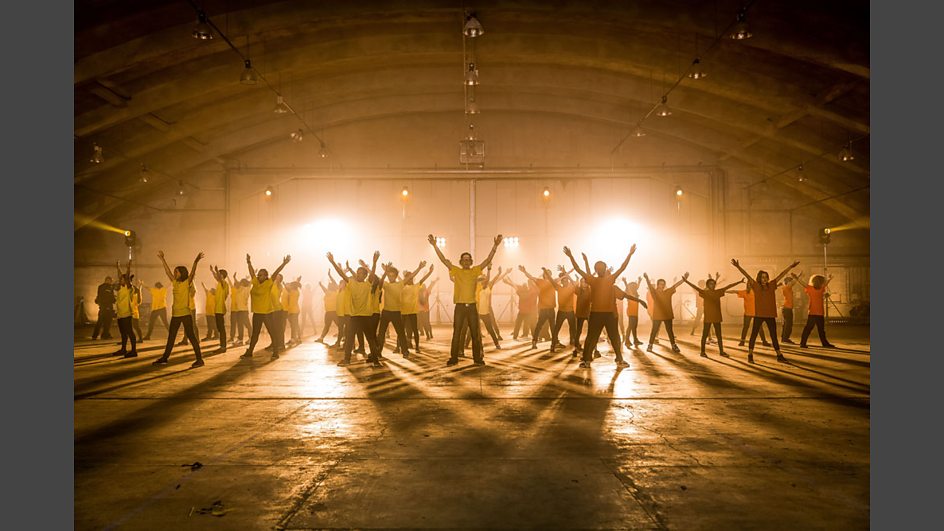
Magical animation

http://www.bbc.co.uk/programmes/galleries/p01z0hh2


Just get hold of it, and show it to your class on as big a screen as possible.

They will be spellbound.

Contemporary music performance

http://www.bbc.co.uk/programmes/galleries/p01z0hh2

I issued my year 5 and 6 children with a clipboard, pencil and paper and asked them to make a note of anything they wanted to remember as they watched – this was partly to prevent them from interrupting to ask questions, and partly to prevent them from chatting, and partly so that they could record their impressions.

We only had time for the first five pieces; Mars from The Planets, In the Hall of the Mountain King, Night on a Bare Mountain, Short Ride on a Fast Machine, and Storm from Peter Grimes.

They were clamouring for “just one more”, even though it was break time.

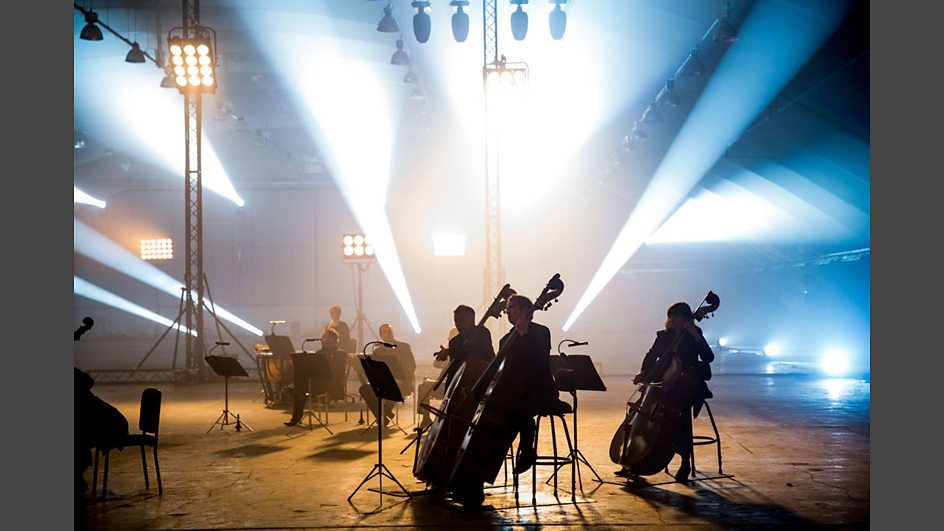
Double basses

http://www.bbc.co.uk/programmes/galleries/p01z0hh2

Guess what we will be doing next lesson! Then the fun will begin. Shall we create our own storm? Or another kind of machine? I’ll be downloading parts and lesson plans from the website

http://www.bbc.co.uk/programmes/articles/xFHT9GvfKjBbtw28pgDgyG/lesson-plans

and making up my mind. Or maybe I’ll let the class choose…

Poppy divider

Posted in Listening Music | Tagged | Leave a comment

Issue 142: Rehearsing with an exam candidate

Today I had a run-through with a candidate who I will be accompanying in a couple of week’s time.

It gives me an opportunity to raise a issue which is dear to my heart, and I KNOW that I have posted on before!

After we had played through a slow movement of a Bach violin sonata, I asked her what she thought the piece was about. Errr. Umm. Don’t really know… I was expecting this as an answer, because that’s exactly what she communicated by her playing. Rhythmically accurate, intonation good, not much in the way of dynamics (none specified in the edition), but somehow, NO CONTENT.

So, I went through my usual questions; fast or slow? happy or sad? major or minor key? What kind of mood?

We decided that the mood was gently wistful, maybe remembering happy days gone by, even though it was in a major key. Perhaps revisiting a place where you had been very happy al long time ago. That, with a basic outline for dynamics of louder when you were higher pitched and playing faster notes (scary, for violinists!) and softer when playing more slowly or lower pitched phrases, and we tried it again.

Result! Now there was shape and communication.

If the player doesn’t understand the music, then their bewilderment is what the listener will hear.

The other suggestion I made was that she should try drawing simple objects, like flowers, or animals, using a single line, without lifting the pen from the paper. This was to encourage a longer line in her phrasing, and a sense of continuing the shape of the phrase all the way through.

Paul Klee, 'Burdened Children' 1930

Paul Klee Burdened Children 1930
Tate Modern
“A drawing is simply taking a line for a walk”

This is something I picked up from my daughter, whose drawings always have such long flowing lines and shapes. I remember her showing how important it is for finish your lines in a purposeful manner. Her comments have influenced the way I hear and play these long intricate phrases in music.

Poppy divider

Posted in Learning, Lessons that have happened | Tagged , | Leave a comment

Issue 141: Welcome to The Jungle

Another week has flashed past – another round of recorder, ukulele, samba, djembe lessons, another set of class music lessons planned, taught and reflected upon.

Thinking over the lessons is such an important part of teaching. Reflecting on what went well, and what didn’t work.

Releasing a class of infants into the wide-open space of the school hall can be a bit like letting a genie out of a bottle. Suddenly they are everywhere, and regaining order can be a challenge. Why did that happen? What can I do to avoid it next time?

An afternoon of back-to-back samba lessons left me feeling as though I had been dragged through a hedge backwards. Why? Was it me? My choice of activities? Or perhaps the children were too tired – their whole afternoon had been a round of demanding physical activity and maybe the noise and energy of samba was just too much. It isn’t always the teacher’s fault if lessons go awry!

Then there are the lessons that worked like a dream. How did that happen? What did I do that made it all come together so sweetly? Can I capture the essence and save it for a rainy day?

One of my resolutions for this year was to keep a diary, and so far I have managed to write something every evening. Not only about teaching, or “another early night again, I’m SOoooo tired”, but things I have noticed in the day. It has seemed to slow the mad rush of time slightly. Today’s observations; unseasonable, but welcome, warm weather, and the golden brown of the leaves on the chestnut trees. The look on one boy’s face when I praised his singing and asked him to be a “Singing Leader”.

Yeah. It’s a good life!

branch divider

Posted in Uncategorized | Leave a comment

Issue 141: Leaping about on a piano

Well, not literally, of course!

No, it’s when you have to jump to a new chord.

Step 1 is to KNOW where you have to land – seems obvious, but too often the student hasn’t really, REALLY learned the notes, shape and fingering for the chord they are jumping to.

Step 2 having overcome deficient note-reading skills to work out the notes and accidentals they are aiming for, they need to commit it to memory. Sometimes I give it a “name” – maybe something bizarre like “Fred”, more often something descriptive like “middle black note E and D”. I might even call it “G7 second inversion” if that works.

Step 3 you need to be able to take off from the previous note, and while in flight, form your hand into the shape for the landing chord and arrive in good time to be able to delay playing the chord until the exact moment in time that it should sound. It is always a recipe for disaster if arriving at the chord and playing the chord are not separated into two separate motions.

My student hadn’t really dealt with steps 1 and 2 so it was no wonder that step 3 never worked. He’s impatient of a step-by-step approach to learning, so I used trickery and guile…

In order to assist with the note learning, I asked him to think about which finger in the three note chord would be the one to focus on, as the “guide-finger” to aim for. We tried each one in turn, to work out which was best. (Hidden agenda – we learned each finger’s note in turn, and also the hand/finger shape of the chord).

I asked him to come up with a descriptive name for the chord. He rejected “Fred” as “too silly” (if often works for me, but then it was to be his choice. He came up something that suited him, so we were now able to play the preceding notes and then jump to “D-middle black-C”.

The next thing was to remove the rushed, panicky approach to the chord. So, to start with, just freeze on the preceding note, imagine the fingers and notes and shape of the chord, and then gently move to it, naming the chord and using the chosen guide finger. Keeping everything gentle, steady, un-hurried, calm and accurate is essential at this stage, and as the mental and physical tensions are removed the leap becomes easier and easier.

Sadly, I suspect that this student will be in too much of a hurry to go through this process back home… well, we shall see…

branch divider

Posted in Piano, Practising | Leave a comment