Issue 104: The “Deda Robot” Game, and the “Cyborg” game

On the whole I try and post about things that anyone can do without having bought expensive CDs and books. I’m wary of encouraging people to buy a particular resource, especially when it costs around £30.

However the ACBlack “Developing Music Skills” book and CD has been such a mainstay of my teaching ever since I bought it about 6 years ago that I have no reservations about heartily recommending it. (I have seen second-hand copies around for much less.)
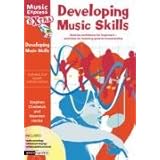
 Product Details

If you have the book, here are two games that I invented which have been inordinately successful over the years.

The “DeDa robot” game, suitable for Early Years and up to year 4

This uses the track called “Beat Patterns”. It consists of energetic and rhythmic music with a strong sense of pulse (at least to begin with) which is randomly interrupted with a robotic sound, something like, “deda-deda-deda-dada-deda-dada-deda-da”

I have invented a little story to go with the game: “there is an invisible robot which hides in the room all the time when the music is playing, and then suddenly comes out and runs all over the place singing its little robot song. When you hear the song, you have to freeze, to avoid treading on the robot (obviously), and when the music plays, you get to move around the room”

Then I revert to robust teacher mode: “NO BUMPING NO RUNNING AND STAY ON YOUR FEET“.  I’m such a spoilsport. I encourage the children to move in time to the pulse, as much like a robot as possible. Use your own discretion about allowing them to go backwards…

As the music ends I seize the opportunity to call “Everybody Sit Down” which assists in regaining calm.

I also use the music and the game for tidying up, or leading the children out to play.

The “Cyborg” game, suitable for all Keystage 1 and 2

Use the track “Cyborg Chase”. You will need to do a bit of listening and preparation work before you play the game. Listen to the track together; you will hear that there are four sections, each four bars long. In the first section, beat 1 is clearly marked. In the second, beats 1 and 3 are marked. In the third section beats 1 2 3 and 4 are accented, and in the fourth section the half beats “1-and-2-and-3-and-4-and” are accented. The whole sequence is then repeated.

After some kind of preliminary work (sitting down for this is best) marking the patterns with hand or arm movements, you can transfer this to movement. This is the game; the children may only step on the accented beats. So, in the first section, they will move to their left foot (say); then their right; then their left, then their right foot. In the second section they will move on beats 1 and 3. In the third, march on beats 1 2 3 4. Finally (and make this ABSOLUTELY CRYSTAL CLEAR) the children run ON THE SPOT.(“Where do you run?” “On the spot!” “Sure?” “YES!”)

This is a good game as it stands, but to extend the game, challenge the children to end up in exactly the same place as they started. This is most effective if you start with everyone standing in a circle (or by their desk if you are in a classroom). It is harder than you think and may well take several goes for everyone to get the hang of it.

This game and track provides a useful was in to rhythm notation. Either use just crotchets, crotchet rests and quavers, or the whole array of semibreves, minims, crotchets and quavers. I print off the picture of the cyborgs doing their stuff from the CD rom, hand copies to the children, and get them to write in the rhythm notation. Works like a dream every time.

cat in a box

Posted in Class Teaching, Listening Music, The organised teacher | Tagged , , , , , | Leave a comment

Issue 104: The value of lesson reviews

When I first started being a class music teacher, I found the whole business of writing up a lesson review to be very tedious, and on the whole it didn’t happen. As I only taught 5 classes a week, in a small village school of about 150 pupils, it was easy for me to remember the lessons from week to week.

These days, I make a point of writing up a concise but comprehensive review of each lesson. I am now teaching around 420 primary school children, in 8 primary schools, delivering a range of different lessons in class music, samba, djembe, keyboard, recorder and ukulele. Now that takes some remembering!

more tea?


I usually jot down a few comments straightaway after the lesson, an then write a proper review as soon as possible (probably when I have a cup of tea at the end of the day!). The “proper” written review isn’t very long, just a series of comments and statements.


Each review covers a number of important and useful areas. The act as a record of;

  1. what I actually taught (which is often not exactly what is on the plan!). This means that I will know if I have used a particular song or warm up activity with that class. I can also see how far we went along the learning path; did we add the intro and the breaks? Have we combined the G and the C chord in a song yet? Did we learn the second verse of the song?
  2. what worked well, what didn’t work, any unexpected difficulties which I hadn’t anticipated.
  3. any problems with the instruments; for example, the number of the djembe sent back for repair, a need to rethink how we plug in the keyboards or seat the children, how to manage carrying the big xylophone over to the school hall.
  4. notes on particular children; who sings exceptionally well, who hasn’t “found their singing voice”, who is full of contributions to class discussion, who needs support with keeping the pulse. I highlight this part of the review in red, to help with report writing at the end of the year (I am VERY glad that I only have to write or contribute to about 200 of these reports!). Also who should NOT be allowed to sit next to each other…

Writing these lesson reviews helps me reflect on the lesson, and I will usually end up revising future lesson plans (I try and rough out half a term of lessons at a time) based on bright ideas generated by the children’s responses, or from thinking through how the lesson worked (too intense, not enough time for music making, need to improve singing quality, layout of room not working).

In the end, the lesson review is much more than yet another admin task foisted upon the teacher. It is something for you: an opportunity to become a better teacher, delivering a better musical experience to the children in your charge. If you are not regularly reviewing your lessons, I recommend that you give it a “proper go”. Keeping track of your teaching, and of the progress of the children will improve your effectiveness as a teacher.

cat in a box


Posted in Class Teaching, The organised teacher | Tagged , | Leave a comment

Issue 103: Welcome to the Jungle

This week I had a nice surprise in my email in-box – a very welcome email of appreciation and thanks. It’s always great to get feedback.

Quick addition here – there are (as always!) a couple of typos. Comes of being in a rush and then ending up cross-eyed. I’d like to correct the ones in the articles on keyboards and chime bars, so have put the corrections in green.

I’ve produced a MONSTER issue this week, because once again the week has thrashed past me before I could get the Jungle updated.

So, savour it, take your time, don’t devour it all in one go!

Let’s see if I can remember what I have spent this afternoon writing…

Some thoughts about the start of the new year, a Benjamin Britten project called “Friday Afternoons” (I have just ordered a CD of the songs from Amazon!), a keyboard wider opportunities lesson and how I am going to tackle teaching them to read music, the same thing using chime bars, dealing with a chatty and tootling recorder class, and a reflection about teaching theory.

That’s six items, three for this week, and three for the week before which I missed. Well, if you are paying for The Music Jungle to be delivered on your Kindle, it’s a bit of a poor do if it doesn’t arrive.

Have a good week.

doo do-by doo sh


Posted in The Jungle | Leave a comment

Issue 103: The New School Year

Many of you classroom teachers will be well into the groove by now. We peripatetic teachers don’t really get going until the second week of term, to let the usual pattern of the school timetable established, and to give us a chance to organise our own teaching schedules.

One thing that struck me anew was how young the children are. By the end of last term, our year sixes were all nearly year 7s, tall and confident and more than ready for secondary school, and the year 3s were bursting out of their infant classrooms, eager for the upgrade to junior school.

Now, the new Year 6s look strangely shrunken, the year 3s look tiny, and the year 1s seem to need an afternoon snooze much more than a music lesson after lunch.

very tired snakeI know I didn’t do a good job of pacing the lesson for the youngest children last week. Too much “work”, and not enough play. We are doing “pulse and rhythm”, and we played games, and sang simple songs, and played instruments, and suddenly, after about thirty minutes, the children all seemed to just fizzle out of energy.

I think I need to have more “play-like” activities, where the children can just go “off-line” and dream along for a while without needing to concentrate. A story  maybe. Or even – dare I say it – a little bit of colouring? Just for the last few minutes!

doo do-by doo sh


Posted in Class Teaching, Lessons that have happened | Leave a comment

Issue 103: Friday Afternoons

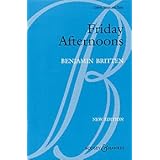
This is the name of a set of 12 songs composed  by Benjamin Britten between 1933 and 1935 for the children of a prep school where his brother used to teach. On Friday Afternoons there was a choir, and, judging by the songs, they were pretty good singers. You have to be no mean pianist to manage some of the accompaniments too.

Product Details

Britten’s 100th birthday would have been on 22nd November this year, and there are a number of projects on the go to celebrate it. One revolves around these songs; you can find all about it here: www.fridayafternoonsmusic.co.uk.

I strongly recommend the site for downloads, backing tracks, and background information.

His arrangement of “Old Abram Brown” is one of the easiest songs to learn and play (although you will need to listen carefully to make sure that the children manage the octave leap to an “E” while still maintaining a good tone and pitch control!). “Cuckoo” is one of my favourites.

The songs have also been uploaded onto You-Tube by a Italian choir.

doo do-by doo sh


Posted in Songs | Tagged , | Leave a comment

Issue 103: Chatty Class Techniques – the Sleeping Teacher

I teach two year 3 recorder classes  (children aged 7) on a Friday afternoon just before home time. So, in come twenty children at a time, armed with various recorders in brown, blue and sparkly pink. They are all dead keen to blow them, but have NO powers of concentration left, straight after PE, near the end of a busy day, after a long hard week of school.

They suck their recorders like sticks of rock, which is annoying, but at least it is silent. Then they blow on their recorders… and they don’t realise that they are tootling. It just happens.

I start gently; sort of like a summer breeze. “Put your recorders down please and watch me for a moment while I show you what we are going to do.”

It doesn’t take long before I’m up to storm force 8: “TAKE your recorder OUT of your mouth and STOP blowing it.”

Over the year I will try everything;

rewards “If no-one tootles, we will definitely do the robot song at the end of the lesson”Capuchin plays the recorder

sanctions “We will all do 10 seconds silence every time I hear a tootle”

warnings “If you tootle I will take your recorder away”

confiscations “GIVE me that recorder NOW”

In the end, I have found that the most effective way of dealing with the interruptions and the frustrations has been to just STOP. When the chatting starts, or if I hear

Monster in the castle

a tootle, I slump against the whiteboard, mid word, as though I have suddenly fallen asleep. It only takes a second before the noise ceases, at which point I come back to life again and carry one exactly where I left off.


After a week or so, all I have to do is begin to sag and let my eyelids droop, and I will hear someone say “Shh, Shh, she’s falling asleep again”, and the class will fall silent.

Then I merely smile brightly, pull myself together and continue. Perhaps I shouldn’t do the nice bright smile. I checked that in the mirror; maybe it is a weeny bit scary. I think it could possibly be something about all those teeth.

doodoobee-copy

Posted in Lessons that have happened, Recorders, The organised teacher | Tagged | Leave a comment

Issue 103: First “Wider Opps” Keyboard Lesson

sssss


I haven’t taught Wider Opportunities Keyboards for a couple of years now. However, this year, I have got a year 3 (aged 7) class for keyboards which has given me a chance to re-think how I approach things.


aliens on the keyboardI’m very keen to get started on note-reading as early as possible. All my pupils will have heard me sounding off against writing in note-letters under the notes, whatever instrument they are learning. I really believe that it is counter-productive. Usually we will only have covered about three notes by the end of the year sorry, I meant TERM anyway, how hard is that to remember? Per-leeeese!

I have decided to start with note D, for Dog, living in the little dog-kennel made by the TWO BLACK NOTES, played with the RIGHT HAND POINTY FINGER. So, my preparation for this momentous step will consist of teaching crotchet and quaver rhythm notation, playing rhythms on any old note on the keyboard, then on D, and then showing them how to write the notes stuck to the underneath of the bottom line of the stave.

It looks, sounds, reads, as though it should be fool-proof. Ha! Fool-proof, maybe. Year-3-proof? Never.

This is all a couple of weeks away, so I have plenty of time to work up my patter. We will have to go through the different voices, and the different styles (“drum-beats”) on the keyboards first – there is no WAY I am going to be able to teach them anything requiring their full attention until we have got that out of their system. In the very first lesson, all further exploration of the voices on the keyboards ceased four nano-seconds after the first child found the “special effects” voice, and from then on the hall reverberated to the happy sound of children learning how to produce vomiting, grunting, cock-a-doodle-do-ing and other wonderful sounds from their keyboards. Playing anything melodious will have to wait a couple of weeks.

doodoobee-copy

Posted in Keyboards, Lessons that have happened | Tagged , , | Leave a comment

Issue 103: Pitch – year 3/4

I have decided to spend the first half of term exploring pitch with my year 3 and 4 class (7 and 8 year-olds). The year 4s spent last year doing a Wider Opportunities Djembe programme, so didn’t have much time with pitched percussion over the year. The year 3s had general classroom music which covered most of the elements as we went along.

What I want to do is to see if I can get most of the children able to read and write simple musical notation on a real manuscript paper. I’m kind of following the same sort of ideas as the year 3 “Wider Opportunities” keyboard class I’m teaching at another school, but using chime bars and xylophones.

I am starting from note letters, in direct contradiction to how I plan to teach keyboards, simply because the chime bars already have the letters printed on them.

So far, after two lessons, I’m really pleased at how it is going.

In lesson one, after a bit of prep about pitch, and high and low notes, and higher and lower notes, I taught the song “Miss Mary Mack”, making a really big deal of pitch movement. We sat on the floor, and as we sang, we tapped the floor for “Miss”, knees for “Ma-“, shoulders for “-ry” and head for “Mack, Mack, Mack”. We repeated the movements for the next line, and then for the third line the movements are head, shoulders, knees, shoulders, shoulders, shoulders. The last line is the same as the first. After we had sung and shaped all the verses a couple of times, I showed how the movements related to the note letters, C D E F (“The LONG chime bar is the LOWEST sound and goes on the LEFT”. We spent the rest of the lesson working in groups of three bonging, away at the tune – a pleasantly mellow sound with 10 sets of chime bars and medium soft beaters all hard at work.

Lesson two started with a condensed repeat of lesson one, except I handed out little notebooks (half-a-dozen sheets of A5 paper stapled together) and pencils, and set them the task of writing the letters for the tune as well as playing it. This was slightly more problematical, but most children succeeded. I encouraged them to “work together”, or in other words, copy from each other; after all, this isn’t an exam!

I then taught “Funmje Alafia” (starting on F, not G is in the link), so each note is one letter lower). Most of the children remembered the song from last year. We added the pitch movements for just the first 3 lines; head head, thump my hands onto the floor, knee knee, floor. I was very encouraged to see how many children suddenly scrabbled for their pencils; clearly a Very Large Penny had suddenly dropped and all the lights went on in their heads.

We’ll finish off Funmje Alafia ( for the last line, AA,G F, G will be hands up-a-bit above the head, A will be stretch up high) next week. I’m also planning to do Bee, Bee, again starting on F instead of G (F, D, FFD, FFGGFFD, FFDDFFD, FGFD) next week (head, knees, head head knees, head head, up-a-bit, up-a-bit, head, head, knees etc).

I’ll keep you posted regarding the next steps…

doodoobee-copy

Posted in Lessons that have happened, Percussion, Songs | Tagged , , , , | Leave a comment