Issue 68: Finding Patterns

As part of a series of lessons on music form with a year 5 and 6 class, I gave them the task of going through a piece of notated music and colour coding all the bars with matching patterns. The piece I used is called “Bodyworks” from the AC Black “Music Express Extra -Developing Skiils – Celebrate” book and CD. It is a fairly complex piece, notated for two players, each performing a complex pattern of body percussion using clapping, stamping, and chest (we used knees).

I spent some time going through the piece using an interactive whiteboard, making sure that they understood the notation (we had covered all the rhythms in other lessons the previous year), and the concept of bars and bar-lines, and which lines were for which part. I then gave some children the opportunity to find bars which had identical notation, and showed how I wanted them to use coloured pencils to colour code the whole piece. They all had their own sheet, but I allowed them to work together and support each other.

Here is a much simpler version of the kind of thing that I am talking about, with just  one part:


Posted in Learning, Lessons that have happened, Theory, Uncategorized | Tagged , , | Leave a comment

Issue 68: Background Music and The Tales of Beatrix Potter

We’ve been watching the programme “Professional Masterchef”, but I’ve become increasingly distracted by the background music to the point where I often miss the details of the culinary perfections being described as I am listening to the pianist doing their stuff.

Once, when we were waiting for an interminable time for the contestants to discover wjich unlucky person would be going home, I noticed that the music seemed relentlessly cheerful.

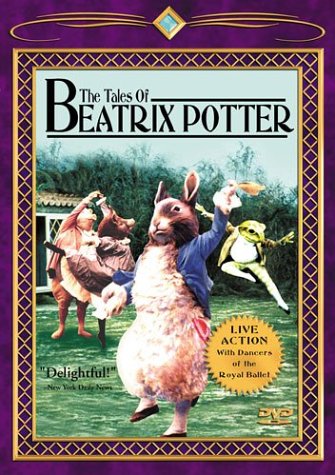
Through a meandering series of reminiscences, this reminded me of a lesson I taught to year 3 and 4 pupils about conveying action and story through music. I used a favourite DVD; the wonderful, wonderful Fredrick Ashton and Royal ballet version of “The Tales of Beatrix Potter”

which came out in the 1970s. I chose the part with “The Tale of Jeremy Fisher”; where a frog has a narrow escape when he goes fishing. Once the children had got used to the idea that the story is told through mime and dance, they were enchanted. We watched the story, and then discussed what had happened. They were much more aware of the dance and the story than the music, which had mostly passed them by.

I then replayed the story, but stood in front of the screen so that they could not see the picture as the moment came when Jeremy is nearly eaten by the fish (I apologise for the spoiler to anyone who is new to the Beatrix Potter stories!). The music follows the action superbly, and the children were all as excited the music only experience as they had been by the dance.

Over the course of several lessons we watched quite a few of the episodes; Squirrel Nutkin and  The Tale of Two Bad Mice became favourites, as was the disastrous picnic and food fight between the Town Mice and the Country Mice.

Now that I have been reminded of this, I think I’ll dig out the DVD and add it to my lesson plans for this coming term. One way of developing the idea would be to move on to composing our own music to illustrate the story, and play it while the DVD is running.


Posted in Composition, Lessons that have happened, The organised teacher | Tagged , | Leave a comment

Issue 67: Welcome to the Jungle

I have done a quick raid on google, and come up with a couple of music-and-maths quotes that set me thinking…

People always say that music and maths are connected; and indeed I studied both at university. It was then that I discovered that I was not a mathematician; I liked the kind of maths that had answers like “62” or “54.6”, and at university we spent our time supposing that “f(x) is a function of x such that” zzzzzz (I was usually asleep by then).

I like the concrete side of working with numbers, in the same was I like the real side of working with sound.

Anyway, here are two quotes, and the tracks that my thoughts took me down.


Posted in The Jungle | Leave a comment

Issue 67: Music and Maths – Structures

“Each time I’ve learned a little bit more about the inner structures of music, the math of it and the shape of it, my joy in it has increased.” — recording artist Peter Mulvey, in the Nov. 2000 Performing Songwriter

http://www.math.utep.edu/Faculty/lesser/M&Mquotes.html

I’ve written about the circle of fifths before: I was introduced to the very basics of the idea when I first started learning to play the piano, probably when I was about 5 or 6 years old. The teacher I had taught me in the old-fashioned way. She played a phrase, I tried to copy her, she would say “No, no, like this” and do it again, and so it went on. The net result was that after four years I still couldn’t read music, but I could play C, G, D, A and E major scales, one octave, hands together in contrary motion. I loved the way that each scale started on the fifth note of the previous one, and the way that the fingers of each hand matched each other perfectly.

It took three years of hard, unrelenting graft by my next teacher before I could read music and play scales in similar motion. This is probably why I am so obsessed with teaching similar motion scales and note reading!

I find the theory of music, and the patterns of intervals, and inverse intervals, and chords and harmonies beautiful and deeply satisfying. The physical experience of playing the piano, with the patterns and shapes I make with my hands and fingers is also a source of great pleasure, part of the whole musical experience.

Posted in The Jungle | Tagged , | Leave a comment

Issue 67: Music and Maths: Counting

“Music is the pleasure the human soul experiences from counting without being aware that it is counting”

German mathematician and philosopher Gottfried Wilhelm von Leibniz (1646-1716) who co-discovered calculus

from the website http://www.math.utep.edu/Faculty/lesser/M&Mquotes.html

It took me years and years before I could actually count out loud while playing music.Even now, I can only count up to three or four when I am playing. So I have to count 6/8, or 9/8, as repeats of 1 2 3 1 2 3. In the end, I usually end up muttering “der der der der” and keep the pulse that way.

I am currently accompanying a violinist playing a Greek piece in 7/8 time. There is NO WAY I can count to 7! The rhythmic pattern is mostly 1 2 3 1 2 3 4, or 1 2 3 1 2 1 2, and this works reasonably well, except for the ends of phrases where we have a tendency to either chop a quaver or add a quaver to make the timing fit into a more “natural” rhythm or 6/8 or 8/8 (which is the same as 4/4, or “common time”). Tricky.

Once I was at a wedding where the organist clearly did NOT count the beats; every line of the hymn ended with a long note, which he chopped by at least half a beat, so that he always started the next line of the hymn just before we were ready. Maybe it was his dastardly ploy to stop the congregation from dragging.

As a performer, I think that it is my duty to count accurately as I play (except for changes in tempo for expressive purposes) and it is the the souls of the audience which are unaware that they are counting.


Posted in The Jungle | Tagged | Leave a comment

Issue 66:Welcome to the Jungle

Due to various events, my schedule is a bit flaky at the moment, and will stay that way at least until the end of the year. However I am doing my best to keep the Music Jungle updated every week, even if it is a day or so late.

So, here we are, with this week’s articles; the Young Person’s Guide to the Orchestra, introducing “New-Note-G” to my year 3 beginner recorder class (they are going SO well at the moment!) and a gruelling battle with G# minor scale in contrary motion… The usual eclectic mixture as before!

Posted in Uncategorized | Leave a comment

Issue 66: Using Music Videos

I had a brainwave this week: I was planning a lesson for year 5 and 6 on the instruments of the orchestra, and wanted to show them a video recording of Benjamin Britten’s “Young Person’s Guide to the Orchestra” that I have acquired somewhere along the way.

The brainwave was not that I used the recording, but that I showed it to the children WITH THE SOUND MUTED to begin with. This happened purely by chance; when I was checking that my copy of the recording would run I turned the sound off so as not to disturb everyone else in the room. I noticed how much easier it was to focus on the appearance of the instruments without the added dimension of sound.

In the lesson, I first explained about the structure of the piece, and then showed just the first section (main theme) with the sound off, talking over the images to name the families of instruments, and the individual instruments as they appeared on screen. I then went back to the beginning, turned the volume back on, and played it all the way through. The children were fascinated by the different instruments; the sounds the instruments made, and the varied appearance of them all.

To my surprise, they watched and listened attentively for the whole piece. We followed it up with questions and comments about the instruments and the music.

This lesson was in preparation for a visit to a concert at a local musical secondary school. It will have failed a lot of the requirements for a “proper” music lesson, as there was no movement, no music-making, no singing. However it was a first experience of seeing and hearing a classical orchestra for many of the children, and left them all buzzing with interest.

I have found a copy of the recording I used here, on TeacherTube;  http://teachertube.com/viewVideo.php?video_id=46663&title=Instruments_of_the_Orchestra_Part_2

Posted in Lessons that have happened | Leave a comment

Issue 66: Beginner Recorders: reading the dots

I do go on and on about this, but I strongly believe that if you don’t teach children how to read music when you teach an instrument, you are not doing them any favours. So, my year 3 recorder players are presented with staff notation right from the very first lesson.

I also take a firm line on writing the letters in under the notes – when they are playing pieces with only one or two notes it is totally unnecessary. I despair of parents who “help” their children by writing the letters in – how hard can it be to distinguish between “B-with-a-line-through-it” and A-in the space between the lines”?

Yesterday we embarked upon our third note, “G”. I use John Pitt “Recorder from the Beginning” at this school, partly because that’s what they’ve always used, partly because it’s a good basic tutor. I know that there are others – in fact I use David Moses “Recorder Boppers” at some of the other schools I teach in, but that’s a topic for another day.

Anyway, John Pitt introduces with a brilliant little tune called “Joe Joe”. I won’t steal his work, so will illustrate how I taught “New-Note-G” using “Mary Had a Little Lamb…

STEP 1 Everyone puts their recorder down, and looks at the music (I have it up on a whiteboard, and the children mostly have their own books). We sing through just the first two lines to learn the tune. We sing it through again, following the pitch by pointing to our LEFT HAND fingers with our right hands:

Mary had a little lamb                  pointing to fingers 1 2 3 2 1 1 1

Little lamb, little lamb                   pointing to fingers  2 2 2, 1 1 1

Then we look at the dots (note heads), and see that there is a dot with a line running through it on the second line up – “New-note-G”

We sing through the song again, looking at the dots, and sing it with the letter names.

Then, when this is all going well (and it only takes five minutes or so) we pick up our recorders, and work out that the pointing to our fingers corresponds to the holes on the recorder, and new-note-G needs three holes covered. Now we play, and Mary and her little lamb should “happen” fairly accurately.

We then look at the notation for the last two lines, read the notes out one by one together, and most of the children will correctly call out “G” every time. It’s worth doing the finger pointing and singing through exercise first, before attempting to play these lines. By the end of the lesson, the children should be pretty fluent at reading B A G, from notation, without any letters under the notes.

By the way, when they are playing, DO NOT HELP THEM BY PLAYING ALONG WITH THEM! They will just watch your fingers, rather than the notes on the stave, and you will have started a most undesirable habit! You have been warned!

Posted in Learning, Recorders | Leave a comment