Issue 66: “Thinking” in order to learn – contrary motion scales

If you play a “single line” instrument, rather than a keyboard instrument, all the following is irrelevant, unless you want to see HOW HARD the scales are for keyboard exam candidates…

With one week to go before the piano exam, one of my students and I are having a tussle with G# minor scale, contrary motion.

I have to say it is a beast of a scale, but fear won’t help get it learned, neither will panic.

The purpose of this post is to demonstrate how what I call “Hard Thinking” works for learning and hard bit of music;

So, here is the brute in question:

So, we took it slowly, starting with just the first two notes. G# – middle black note, middle fingers, and then G natural in the LH (OK, we all know it is F## but it looks like a G) in LH and A# in the right. Repeat thease two notes, with eyes boring holes in the keys…

Moving on another two notes; E (in LH this time) always coincides with an B (in the RH this time)

Get that properly stuck into the brain – verbalise what you are doing, CONCENTRATE.

The two sharps, C# and D# always happen “at cross purposes”; C# with D# followed by D# with C#.

Another B at the same time as another E.

Another “G natural” with another A#.

Middle fingers on the middle black note. Yay! you’ve done the first octave! Sort out the fingering; REMEMBER when it is “3 over” or “4 over” so you can get back safely.

Now comes the really, really hard part; doing it by yourself, SLOWLY, dragging each step out of your memory before you play the notes, taking your time. 

In the end, I had him playing the scale at a snail’s pace to start with, commanding him, willing him, encouraging him to THINK before every step. He desperately wanted to “take a run at it”; the pressure of having to be able to get it sorted within a week was over-ruling the learning process. However, one or two gruelling treks through the jungle soon cleared a path through the notes, and G# minor contrary motion began to emerge with more and more clarity. 

This process of slow learning, and slow, determined, careful, dredging through the memory is a useful way of getting to grips with the tough passages. That same method helped us through the chaos of a few bars near the end of the Bach 3-part invention, which was one of those “I can play it perfectly well at home, so why can’t I play it now” moments of near despair, later in the lesson.     

Posted in Keyboards, Learning, Piano, Practising | Tagged | Leave a comment

Issue 65: Welcome to the Jungle

Apologies for the delayed posting of the Jungle this week –  but here it is, and better late than never?

Three posts as usual: firstly some thoughts on finding your fingers. Secondly, a useful little canon, of the musical, rather than military kind. Thirdly, as a result of spending a morning teaching groups of prospective Grade 1 music exam candidates to “clap in time to the pulse”, a way of persuading your pupils to clap the pulse, rather than the rhythm,of the music.

Posted in The Jungle | Leave a comment

Issue 65: How many fingers are there on each hand?

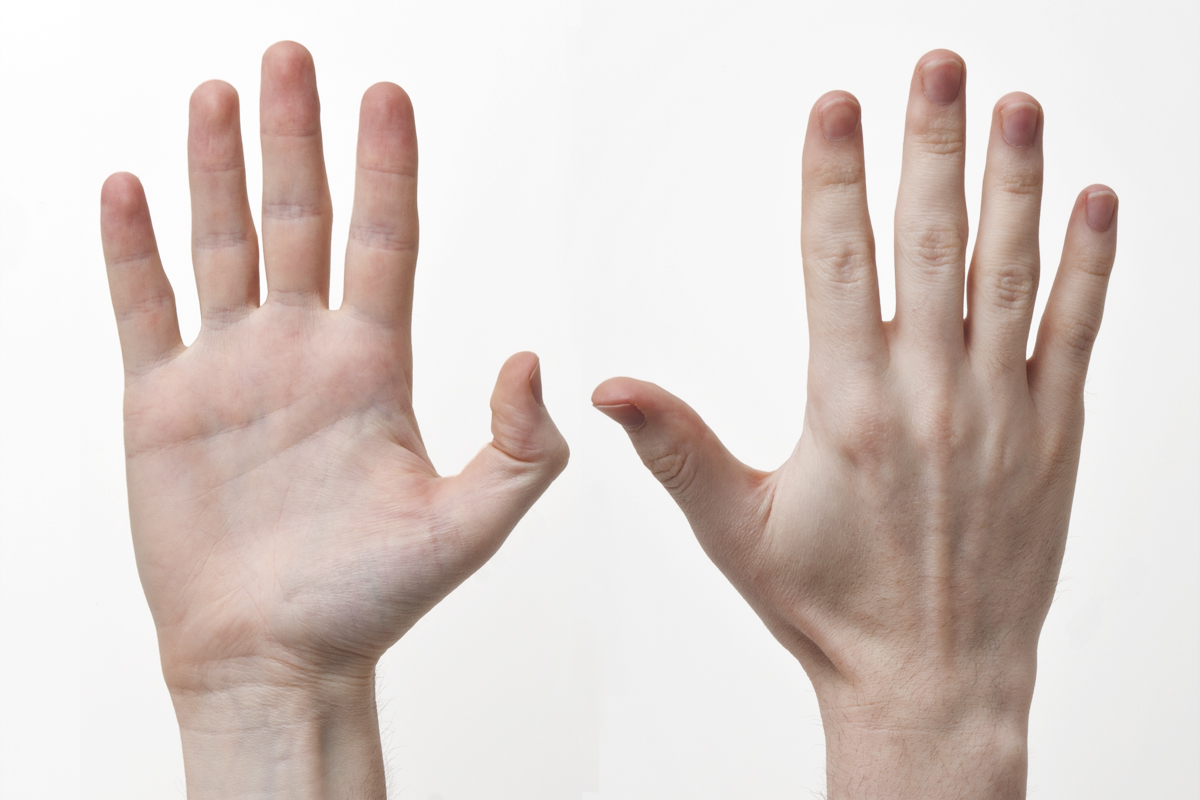
File:Human-Hands-Front-Back.jpg

photo was taken by Evan-Amos as a part of Vanamo Media, which creates public domain works for educational purposes. (Taken from wikipedia)

Recently I have been giving some thought to the way the brain is connected to the fingers. I’ll admit at the outset that I haven’t researched this: the following is just what I think, having observed the struggles of some many people, including myself.

I noticed early on in my teaching career that young children often have only the very vaguest idea of which finger is which. It takes quite a while before they can easily move and play the right (or left!) finger at the right (or correct!) time. It’s often helpful if I touch the finger that they are trying to “find”.

Teaching ukuleles to year 3 has high-lighted this “lack of connection”. Again, touching the finger, and moving it into position can help the child develop the control that will enable them to shift between chords. (Health and Safety; wash your hands after class ukulele or keyboard lessons to keep colds and other bugs at bay!)

I have several adult beginner piano students. They, too, sit there, apparently stuck, as they try and work out which finger is which, and how to play one finger, say, the index finger, of one hand, at the same time as, say, their ring finger of the other hand. You can almost hear the mental effort that this takes.


It is rather like the mental contortions that I go through when I try to wriggle the middle toe on my feet, by themselves. I have a clear understanding of where my big toes, and my little toes are, but absolutely no idea of how to begin to “connect” with any other toes. It may seem like a bit of a mad idea to sit there and try and wriggle all of your toes, but it will give you a bit of an insight into how hard it is for your pupils to sort out their fingers when they are just starting out. Give it a go and see for yourself how weird it feels.

Posted in Learning, The Jungle, Uncategorized | Leave a comment

Issue 65: A Useful Canon

I’ve come across this simple little canon in several places. According to the excellent AC Black book, “Banana Splits”, it is “anonymous”. They use the “Autumn Leaves” words, but I have also sung it to the letters of the alphabet. You need to adjust the rhythm slightly to make the letters fit the melody;

A B C D /  E F G    / H I J K / LMNOP   / Q R S    / T U V    / W  X Y  / Z

I leave it to you whether you sing “Zed” or “Zee” at the end.

Like another little song that I used in my lessons last Winter, “Rain on the Green Grass”, this song lends itself to a bit of creativity in that it is easy to compose new words.

“Christmas time is / coming, / lights are shining / bright.

Don’t overuse your / credit card or / you will get a / fright!”

Okay, perhaps those words are little “too adult” for a primary school class, but I’m sure that your children will be able to come up with something more suitable and topical.

It is also very easy to accompany the song on chime bars or keyboards; start at a high C, and move down steadily, note by note, to the next C. Add a few strategic triangles, a cymbal with a soft beater and now you have an effective little performance.

To go a step further, divide the melody players into two groups, and set the second group off when the first group have reached “O-range, red and brown”. This is a musical device called a canon.

I can see that I am now going to have to research the difference between singing a round, and singing a canon. That’s something for another day!

Posted in Composition, The organised teacher | Leave a comment

Issue 65: Finding the Pulse


http://en.wikipedia.org/wiki/Pulse

Finding the pulse of a piece of music isn’t always as straightforward as you might think. The children are often distracted by the rhythm, and clap the rhythm instead of the pulse.


I have discovered that if you tell them to nod their heads in time to the music before they start trying to clap the pulse, they are more likely to get it right when they clap. I think that it is because it is so hard to “nod” a rhythm; try it yourself with something like “Humpty Dumpty” or “The Grand Old Duke of York”…


I have used the “nod” technique for getting classes of children to play together as an ensemble. If you start the pulse (from a backing track, or a keyboard, or just counting out loud), and ask the children to start nodding in time to the beat, there is a very good chance that when you give the signal to play (for example; “rea-dy-stea-dy-off-we-go”) they will all play at the same speed. At least to begin with.

Posted in The organised teacher | Leave a comment

Issue 64: Welcome to the Jungle

Half term came and went in a flash this time. My PDQ Bach didn’t arrive until earlier this week, and I still haven’t had a chance to listen to it. I am hoping to be able to share “New Horizons in Music Appreciation Beethoven’s Fifth Symphony” with my year 5 and 6 class once we have finished learning about sonata form and instruments of the orchestra, providing the wasps leave us alone in future.

Other posts are about a song collection (another nostalgia trip for me) called “Hello Children Everywhere” and my forthcoming plans for accompanying Miss Mary Mack on ukuleles.


Posted in The Jungle | Leave a comment

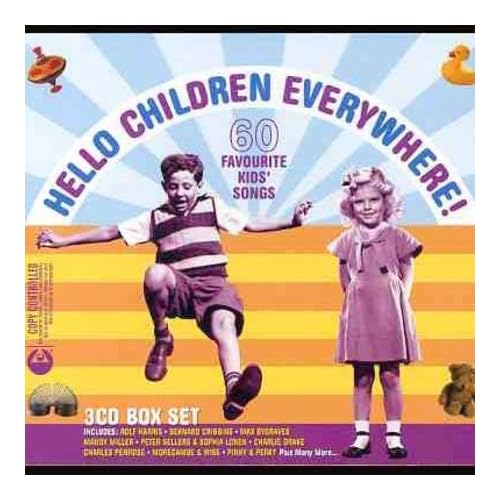
Issue 64: Hello Children Everywhere

I have a three-CD set of songs that I vividly remember from my youth. We listened to them on the Saturday morning radio programme “Children’s Choice”.

My copy of the CD didn’t look like this, but I bet it is all the same songs. “You’re a pink toothbrush, I’m a blue toothbrush, have we met somewhere before?” and “The Runaway train” and “They’re changing the guards at Buckingham Palace” (sung with very dated accent; “They’re chenging the guards at Beckingham Pelece”)

Junior Choice Volume 1

If you don’t want to invest in the three-volume set, you will find many of the songs here. The children still love them, especially the “story” songs like “There once was an ugly duckling” and “The Emperor’s new clothes.” No music teacher’s library is complete without them!

Posted in Songs, The organised teacher | Leave a comment

Issue 64: Miss Mary Mack and the Ukulele

My Wider Opportunities ukulele classes seem to be going well – it is the first time I have taught ukulele and I wasn’t entirely sure what to expect.

As usual, it has proved impossible to use the same material for each of the classes. I planned to start by teaching the C chord, move on to A minor, with a view to teaching F as soon as it looks as though the children will be able to manage to position their fingers. Miss Mary Mack looks like being the perfect vehicle for singing and playing a song using F and C chords. There is plenty of time to change the fingers for the C chord on the third line.

Miss Mary Mack Mack Mack (play an F chord on each red word)

All dressed in black black black

with silver buttons buttons buttons (play a C chord on each blue word) 

all down her back back back

So that was the plan. The reality is that one year 3 class is learning to pluck a simple accompaniment to the good old song “Robin Hood, Robin Hood, riding through the glen” so that they can play it in their Christmas pantomime.

The mixed year 3 and 4 class is going well: they have managed to sing “Star light, Star bright” alternating between C and A minor on beats 1 and 3.

The year 5s are storming ahead. It is amazing what a difference a year makes in a child’s ability to follow instructions, retain information, and organise their fingers into the precise movements needed to play chords. I reckon that they are on track for Miss Mary Mack next week, if they haven’t forgotten everything over half term.

Posted in Ukulele, Uncategorized | Leave a comment