Issue 64: When it is impossible to teach

There are times when it is totally impossible to deliver a music lesson.

Like this week:

I was just starting a series of lessons on musical form, and in particular sonata form, with a bright and eager class of year 5 and 6 children. I was using book 3 of the excellent AC Black “Listening to Music, Elements” series. They have an engaging way of teaching the topic using the Haydn “Hen” symphony.

We were all sitting in a circle in the hall, and I was trying to instigate a discussion leading into the idea of how  “rules” govern the form – eg games (the difference between rugby and football), poetry (haikus and limericks) when the lesson was entirely derailed by the appearance of a dozy wasp, erratically buzzing round at head level and randomly dive bombing the children.

Gender stereotyping was immediately apparent: the girls squeaked, gasped, twitched, ducked, the boys offered responses such as “kill it”, “squish it”, “I’ll get it for you”.

We all watched the wasp with complete attention until it finally settled on the windows at ceiling level. I was very impressed that the children remained seated, roughly in their place, while under threat. The discipline at this school is very good.

Once we agreed that we were no longer in danger, I was able to get going with the lesson again. Luckily, the fun of learning the chants, based on the rhythms of the first and second subject of the movement eclipsed all memory of the wasp. Using changes in dynamics (loud and soft) and changes in timbre (funny voices) compltely occupied the rest of the lesson and all ended well.

Posted in Lessons that have happened | Leave a comment

Issue 63: Welcome to the Jungle


Fireworks at the London Eye on New Year’s Eve.

As I type, fireworks are whizzing and popping all around. I know that bonfires and firework displays will be a hot topic when I go back to school on Monday (image from wikipedia). I have found a nice little lesson plan for a fireworks dance, from Scholastic, which I think my year 1 and 2 children will enjoy.

Within days, for many music teachers, that will all be over as we get stuck into the Christmas Shows. With that in mind, this week’s other articles focus on techniques which I use for teaching the words and the tunes of the songs; a process which has to start straight after half term if you are to give yourself plenty of time.


Posted in The Jungle | Leave a comment

Issue 63: Learning the tunes

Learning the melody is full of hidden pitfalls. It is well worth while checking out the backing tracks for the productions (if you are using them) before you commit. If the production comes with a pre-recorded CD with all the songs, it is so much better if the songs are sung by a reasonably well-trained children’s choir. “Out of the Ark” and “Starshine” productions have got this one absolutely nailed. They also have sensible licensing and photocopying arrangements which positively encourage you to be legal and law-abiding regarding copyright.

It is best if you are able to learn the songs yourself, and teach melody lines without relying on the CD all the time. The problem with relying on the CDs is that the children often learn a slightly different variation of the tune, and then it is a huge job to fix it later, whereas if you get them singing the correct tune to start with, you may avoid this situation altogether.

Use some kind of vocal warm up before each session. The “vocal chords” are actually a muscle, and you should do some kind of stretching exercises, just as in sport, before you start trying to be too athletic. You may already have a selection of warmups; if your school is a member of the www.singup.org website, then look no further. Otherwise, there are CDs of suitable songs: I like the Chicken Tikka Collection and have used them with children and adults.<em>Chicken Tikka Vocal Warm Up</em> Exercises: Book And CD

Pluck up your courage, and teach the melodies a line at a time, “listen and copy” style, checking to make sure that the children are copying correctly. Start with short phrases and link them together. Sometimes it may be necessary to focus on just a word or two where there is a problem. It is a really good idea to use hand gestures to indicate the direction of the pitch.

Laying slow and steady foundations at the beginning pays dividends later.

Once the children have learned each song, you can play it at odd moments in the lessons to reinforce the melody and practice the words.

Posted in Songs, The organised teacher | Tagged | Leave a comment

Issue 63: Learning the words

I’ve always been far better at learning the tune than at remembering the words of songs.

However, I have usually managed to learn all the words for all the Christmas Productions every year. This comes of spending whole afternoons teaching them in turn to each class.

Here are a few tips for getting the words into the children for your forth-coming Christmas Shows…

Read through the words with the children, and make sure that they understand each word. Then go through, discussing what the song is about.

Chant them in the rhythm of the song, especially if there are any unexpected, trappy bits.

Chant them in s-l-o-w-m-o-t-i-o-n, drawing out each syllable, exaggerating the shapes you make with your mouth, spitting out the “t”s and “d’s”

Chant them as fast as you possible can.

Put actions to the words – beware – younger children will find it nigh-impossible to remove of change these actions at a later date, so choose your actions wisely.

Be competitive; divide the class into groups, and get each group to sing a different verse. They will probably all know verse 1, but which group knows verse 6 the best? Then choose a verse, and allocate a line to each group. Or, if you want to go right over the top, make them sing each word in turn.

Bribe them, with whatever your school allows. Check first – I got into trouble for bribing them with chocolate at one school. Stickers work well. Special shiny stickers work even better.

These games help to liven up a “note-bashing” lesson and inject some fun and mayhem into what is a fairly boring process.


Posted in Songs, The organised teacher | Tagged , | Leave a comment

Issue 63: Bonfire Night

Fireworks

Here is a resource for creating a Fireworks Dance: http://education.scholastic.co.uk/content/13869

The page includes this picture, and this free poem full of fizzy, crackling words, and a complete lesson plan for creating a fireworks-themed dance sequence in the context of a PE lesson.

Click to download

It just struck me that the same resources and ideas would combine very well with percussion to create a movement and music sequence. Year 1 and 2, here I come….

Posted in The organised teacher | Tagged , | Leave a comment

Issue 62: Welcome to the Jungle

Half term. Phew. Eight weeks seems a very long time. I find that most music topics seem to fit neatly into 6 week,s and can be stretched to make 7 weeks, but 8?

Last week in my class music teaching, I found myself teaching a djembe lesson to year 3 and 4 with 10 minute’s notice, as their usual Wider Opportunities teacher was ill. That wasn’t a great problem, as I teach Wider Opportunities lessons at other schools. I’ll write up that lesson when I am in teacher mode again in a week or so.

The year 5 and 6 class needed the extra week to finish their pentatonic compositions. I felt a bit mean leaving the TA in charge of most of the class, all putting the final touches on their work, klonking away on xylophones and chime bars, while the class teacher was clearly having a tough time concentrating at her desk trying to do some complicated stuff on her lap top. I was ensconced in the comparative peace of the lobby just outside, recording each group’s compositions, taking a few children out of the class at a time.

Year 1 and 2 were all so tired, that we spent their lesson doing “stuff”. They had finished their “Three Little Pigs” musical topic last week, so we did some musical games (pulse and rhythm work) , some moving-to-music (moving rhythmically and expressively to music), sang some songs (singing with expression and clear diction) and then a bit of lying-down-and-listening-to-music-and-talking-about-it-afterwards (listening with attention and developing a musical vocabulary). It was work – just didn’t seem like it.

I have switched my brain off for half term; this week’s posts are on my latest purchases from Amazon and a stupendously silly “musical” game that I found on the children’s bbc website. If you were looking for deep intellectual insights, serious thinking, and critical analysis this week, well, sorry, you are in the wrong place!

Posted in The Jungle | Leave a comment

Issue 62: Victor Borge

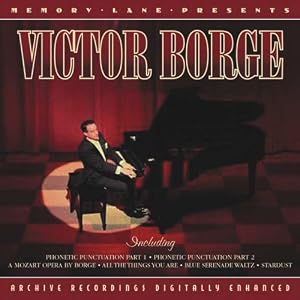
Victor Borge is one of the best, ever, musical comedians. I was introduced to him a long, long time ago by my parents, who have all his recordings. He used to appear on programmes such as the Morcambe and Wise show, and never failed to be anything less than hilarious. I have just thrown all budgetary restraint out of the window and expended £1.87 on this CD.

  I can’t wait to hear the “Mozart” opera again. And again. And again.


Posted in The Jungle | Tagged | Leave a comment

Issue 62: Shaun the Sheep

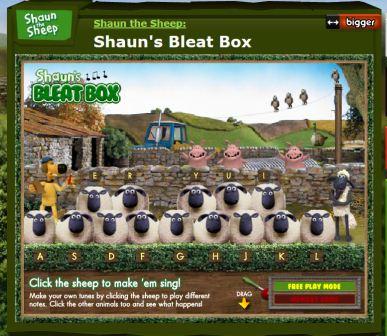
Friday 26th October Shaun’s Bleat Box

http://www.bbc.co.uk/cbbc/games/shauns-bleat-box-game

Nuff said. Go play!


Posted in The Jungle | Tagged | Leave a comment