56/100 Those Mixed Keyboard Ensembles

This is my second year of teaching mixed ability, mixed age, mixed experience keyboard ensembles. There is a long history behind these groups, which is lost in the mists of time.

The situation at the moment is that there are around 13-15 on the register, who usually turn up, and range in ability from “this is my first day and I’ve never played any instrument before” to “I’ve been having individual lessons for four years”. They also range in age from 5 (yes, 5 years old!) to 15 (yes, 15 years old!)

As you can imagine, it is an “interesting” group to manage. A friend of mine once commented that music, and maybe chess, were perhaps the only activities where all ages could take part without an appreciable handicap of age. A mixed ensemble makes it possible for the abilities to be very varied as well…

I plan to start this term with La Cucaracha:


La Cucaracha


So, the children who arrive, never having touched a keyboard in their lives before, should be able to manage the bottom line. The ones who have been coming for a term or so, but have nearly forgotten how to read music, will manage the middle line (some tricky counting to keep them busy), and the others can get to grips with a dotted crotchet, counting the rhythm, and change of hand position and a pesky little B flat.

I’ve a couple more ensembles along this line. This would work as is for clarinets, and you could move it into D major for your violin/mixed string ensemble class. (It’s a nice little ukulele piece too; just F and C7 chords)

birds on a branch divider


Posted in Keyboards, The organised teacher | Tagged , , , | Leave a comment

55/100 The New Term Starts – PLANNING!

I’ve been notified of my school classes for this coming year, and am beginning to schedule where I go to teach what and when! Always a tricky one.

The school classes are sorts: Ukulele on Monday afternoons, Class Music on Tuesday, Wednesday and Thursday afternoons, Samba on Wednesday mornings, and my extraordinary keyboard ensembles on Saturday mornings..

Two mornings of piano teaching at a local school to arrange, and then the tricky problem of scheduling my evening piano pupils. That all depends on gymnastics, karate, swimming, first aid, Duke of Edinburgh, basketball, ballet, extra coaching, and other activities. Hopefully everything will have dropped into place before I start teaching in earnest on 12th September!

Meanwhile, I have been planning and planning and planning…

I have gone through the piano books for several of my pupils who want to take piano exams later this academic year. I don’t usually plan piano lessons in such minute detail, but I have had too many uncomfortable “near squeaks” with these particular pupils. This time I am ready for them! I have chosen the pieces that I think will suit them, and actually written out, week by week for the whole year, exactly what their target for each week is. If they stick to, or exceed their target, then everyone can be reasonably certain that they WILL be more than ready for their exams. Plus I can discuss and agree the commitment before we embark upon the whole adventure. It feels a bit like planning a trek to the North Pole…

So here’s the whole year’s plan for her ABRSM Grade 5 in tiny, tiny detail. This pupil is easily overwhelmed, and will quickly become despondent if she can’t succeed within just one or two attempts.  At the end I’ve put some remarks about practising, which we can go over in the lessons.

A2 Allegro                 B2 Tarantella           C3 Cool

“A piece a week” sight reading every week 

Week Allegro Tarantella C 3 Cool Scales
1

12/9

Bars 1-3 sep Bars 1-6 and 40-46 sep Bar 1-4, RH only, count1a2a3a4a. Identify all times  phrase appears C major and minor (always sep tog, scales, arps, and chromatics)
2

19/9

Bars 1-3 sep Bars 1-6 and 40 – 46 tog Revise RH only all occurrences of 1-4. Learn LH 1-4 G major and minor
3

26/9

Bars 1-3 tog Bars 6-8 and 46-48 sep bar 5 hands sep all occurrences D major and minor
4

3/10

Bar 4 RH, Bar 4-5 LH Bars 6-11 and 46- 52 tog All occurrences of bars 1-5 tog A major and minor
5

7/10

Bar 4 tog, Bar 5 sep Bars 6-11 and 46- 52 tog Bars 6-8 sep

Count 1a2a3a4a

 E and E major and minor
6

14/10

Bar 5 RH

Bar 5-7 LH

Bars 1-11 and 40-52 together Revise 1-5, add 6-8 tog B major and minor
7

21/10

Bar 4-5 tog

Bar 6-7 RH

Bars 1-11 and 40-52 together Compare 14-16 with 6-8, learn hands sep Gb/F# major and minor
Half term
8

4/11


review review review review
9

11/11

Bar 6 tog, Bars 1-6 tog Bars 12-16 sep and tog Page 1 hands together review
10

18/11

Bar 7 sep and tog Bars 16-20 sep and tog Page 1 hands together with pedal F major and minor, start contrary
11

25/11

Bar 7 tog, bar 8 sep and tog  Bars 12-20 sep and tog Bar 45-47 compare with 5-7

Hands sep and tog

F major and minor, start contrary
12

2/12

Bar 1-8 together

Last 6 beats sep and together

Bars 21-32 LH

Bars 1-20 tog

Bar 33-45 together F major and minor, contrary, add B flat major
13

9/12

Bar 1-8 together

Last 6 beats sep and together

Bars  21-32 LH

Bars 20-32 RH

RH only 48 to end B flat major and minor
         

Spring Term 

14

2/1

Review Review


review review
15

9/1

Bars 9-10 sep Review, add bar 33 Revise,

Learn LH bar 48

E flat major and minor
16

16/1

Bars 9-10 tog Bars 34-36 sep Revise,

Learn LH 48-51

E flat major and minor
17

23/1

Bars 11-12 sep Bars 34-36 together Tog 48 to end A flat/ G# major and minor
18

30/1

Bars 11-12 tog Consolidate Tog 33-end A flat /G# major and minor
19

6/2

Play through first page Consolidate LH bar 17-20 D flat/ C# major and minor
20

13/2

Consolidate, start second page Consolidate Hands sep 17-20 D flat/ C# major and minor
Ski Break Half Term
21

27/2

Bars 14-16 sep and tog Review,

Bars 36-37 sep and together

Hands sep/tog 17-20 Add D flat/ C# contraries
22

6/3

Bar 17 sep and tog Bars 38-39 sep and together Revise 17-20 tog

LH 21-24

All learned – only polishing
23

13/3

Bar 18-19 sep and tog Play through 1-52 Hands sep 21-24

Revise 17-20 tog

 
24

20/3

Bar 20-21 sep and tog Hands sep 52 to end Bars 21-24 tog

Bars 17-24 tog

 
25

27/3

Bar 22-23 sep and tog Hands together 52 to end Bars 25-27 sep and tog  
26

3/4

Last bar Play through whole piece Bars 29-29-30 sep and tog  


 Summer Term 

27

24/4

Review Review Review review
28

1/5

Work on sticky places All learned – only polishing Bars 29-32 sep and tog  
29

8/5

    All learned, add pedal/dynamics  
30

15/5

       
31

22/5

       
Half Term
32

5/6

       
33

12/6

       
34

19/6

       
35

26/6

       
36

27/6

       
37

4/7


 Every practice:        Pieces as marked – 5-10 mins each piece

Scales as set – 5-10 mins until accurate and secure

Sight reading exercises – 5 mins

 How to Practice;     Work in small sections – make sure you understand what you are trying to achieve: fingering? Or rhythm? Or notes? Or hands together coordination? Or dynamics/articulation?

 Don’t gloss over mistakes, but focus in on sticky patches until you can play them cleanly. Award yourself points for good scales/arpeggios, or excellent sections, however small, in your pieces!

The exams will take place sometime after 12th June… that seems such a long way into the future…

birds on a branch divider

Posted in Piano, The organised teacher | Tagged | Leave a comment

54/100 “So-Mi” songs, Bee Bee

Another So-mi song which I use all the time with classes up to the age of about 7

Bee Bee

It’s well worth indicating the pitch movement in the melody, with Kodaly hand movements or just by moving your hand up, down, or even higher. (“which words are we singing when I point up in the air”). Otherwise the children will all be individually creative and compose their own version of the melody. Which might be an interesting way of starting pentatonic composition, but isn’t in the scope of this post.

There still are loads of things you can do with this little song; once the children know it well. My two favourites are having one class clap (or play on percussion) the pulse (“I say you’re out”) all the way through, while the others clap or play the rhythm. This moves into simple two-part or three-part samba or djembe piece, when the group can play the three different rhythms “Bee Bee Bumble Be”; “Stung a man upon his knee, which is the same as “stung a pig upon his snout”; and “I say you’re out” at the same time.

Or, stand the children in a circle, and choose one child to stand in the middle and be the “Bee”. As everyone sings the song together, the “Bee” points to each child in turn, keeping the pulse. Whoever they are pointing to on the word “out” is the next bee, and they swap places and off we go again. Trickier than you would think. If it is a bigger class, once they’ve got the hang of it, choose two or more bees to go round at the same time. If you are feeling adventurous, bored, or think the children need a challenge, get the bees to go round in different directions. Younger children will probably have attempted this by accident already.

The Queen Bee

Posted in Class Teaching, Early Years, Lessons that have happened, Songs | Tagged , , | Leave a comment

53/100 “So-mi” songs – Leo the Lion

I have updated the ukulele page with some more simple songs, using Am7 (open strings), C chord, and F chord, but, looking back, I haven’t published the notation for these songs before.

So here are a few posts to get the notation up.

I use a small soft toy for this game (my colleague used a stuffed lion). So, it can be Dilly the Dog, Larry the Lamb, Billy the badger, and once, but never again, Dilly the Duck.

Here’s the song:

Leo the Lion


And here’s how you play the game:

feeding the lions

It starts with one person/child holding the hungry animal.

The class sings “Leo the Lion, what do you say, who would you like to eat today?”

Whoever has got the animal sings the name of the person they choose “I’d like Lucy”

The class then sings “How would you like to eat her?”

And the person with the animal replies “On a pizza”

And the class sings “Yum yum yum” while the animal gets passed (thrown!) to Lucy. Off we go again.

Posted in Class Teaching, Lessons that have happened, Songs, Ukulele | Tagged , , , | Leave a comment

52/100 Brushing up on Sight Reading

'4′33″ (In Proportional Notation)' (1952/53) by Cage. (©2013 John Cage Trust/The Museum of Modern Art)

4′33″ (In Proportional Notation)’ (1952/53) by Cage. (©2013 John Cage Trust/The Museum of Modern Art)
Image from http://observer.com/2014/01/there-will-never-be-silence-scoring-john-cages-433-at-the-museum-of-modern-art/


I’ve just bought some of the new syllabus ABRSM piano teaching books to have a look at what’s coming up for next term. So I open them up, and start playing through – and

AAARGH!

where have my sight-reading skills gone? I used to just blast through the books, not really working up any kind of “brain-heat” until about Grade 5.

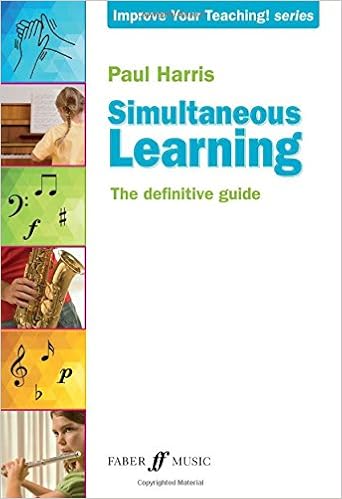
That just goes to show what happens when I’m not practising enough. My fingers felt all disconnected and uncooperative. So, I have set myself the task of checking through a whole grade every day – going through the complete scales and arpeggios list, and then analysing ALL the pieces, making proper notes about techniques, trappy rhythms, suitability for the students I have in mind for the grade. I haven’t done this for a while, but it is proving an interesting experience, especially in the light of the Paul Harris “Simultaneous Learning” ideas that I have picked up.

I haven’t bought his book (yet!)

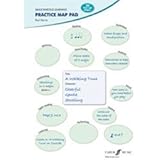
but I had the chance to explore some of the ideas in a study session on a staff training day. Initially I thought – yeah, another “new thing” . Actually, having used the Practice Starter cards in many of my piano lessons this term, and had a good look at the practice map

Product Details

I’m changing my mind. I’m up to grade 3 now, my fingers are re-discovering how the piano works, and my sight-reading is less rusty.

I’ve also bought “A piece a week” book 1 and 2 (the only grades so far) for a couple of pupils who are approaching grade 1 (a quick learner and good note reader) and grade 3 (needs a lot of experience in reading rhythm)

Product Details

and a sight-reading duet book

for a young lad who has a totally closed mind about his ability to read music in spite of being grade 4 violin. He does everything by ear – what a talent! – but has zero confidence in note reading.

Let’s see where this gets us next term…

Posted in Learning, Sight Reading, The organised teacher | Tagged , | Leave a comment

51/100 Recycling – listen and copy percussion game

I make no apologies for recycling an old post here – this site has been up and running for about 5 years and I’ve reached the point where I have forgotten more ideas than I realised.

I was tracking back to another post which someone reminded me of, and along the way I re-discovered this body percussion game from 2013.

Aha! So that’s what I will do with year 5 and 6 for their final lesson of term. They will have performed their show, and as it is the last week music games seems the way to go. I might follow it up with watching “A short ride in a fast machine” from the BBC Ten Pieces (primary schools) DVD to spot the “woodblock man” in action.

short ride in a fast machine


Posted in Class Teaching, Listening Music, Percussion | Tagged | Leave a comment

50/100 Paul Harris Simultaneous Learning

When this card came up in my pack of Paul Harris Practice Card, I though “What a Great Idea”

simaltaneous map 25


So much so, I copied it out and put it where I can see it on my piano. Later, a quick google of

paul harris simultaneous learning map

brought up this link:

http://works-files.s3.amazonaws.com/3f0a7971-098d-49a6-96b5-3e692f99b08b

which took me to these two pages:

Simutaneous Practice 1


Simultaneous practice 2

The page of text is an explanation of the “map”, and an encouragement to use it. The the second paragraph   states that “you may copy this map or make up your own…” which presumably means that he is happy for me to share it.

I have come across this before, several times. To begin with I thought “here comes yet another New Thing”. Like Brain Gym, Thinking Hats, VAK learners, Growth Mindset, blah, blah, blah… yet another “magic method”. But the more I’ve used the starter cards in my lessons, the more useful they are turning out to be. And also a lot of fun.

Practice starters

Take today; I’ve had interesting explorations of rhythm, dynamics, and improvising in my piano lessons with my young beginners, They all look forward to the ritual of “pick a card” at the beginning of their lessons. I should say that I’m not receiving Anything from Anyone for expressing my enthusiasm for these cards!

Next term, I plan to explore the idea of practice maps and incorporate them into my lesson planning.

fanfare for the common ant

Posted in Learning, Resources | Tagged | Leave a comment

49/100 “Listen and Copy”

Just about all class music lessons involve “listen and copy”. It is such a basic process for teaching pitch, rhythm, indeed, any kind of music that I am going to blog about it.

Why? It sounds so simple – the children listen, and then they copy. What could be more straightforward?

So, you play a short, four-count rhythm on my instrument, and a chaos of loud, unregulated, noise ensues. Once order has been restored, you start again.

“I’m going to play a pattern, and then you are gong to copy it.” I start to play a simple rhythm, and they’re off again.

Noisy monkey

Sigh. It can take several lessons, with you pointing to yourself, or holding your ear when they are meant to listen, and then pointing to them when it is their turn, for them to eventually get the idea.

I’ve run into this problem every time I have started teaching a new class in a new school for a new Wider Opportunities programme.

There has to be a more efficient, easier way –  there is – and here’s what works for me;

It all goes back to “say, clap, play” – in this case combining “say” and “clap” to begin with, before moving on to “say” and “play” (doesn’t work so well for woodwind lessons, unfortunately).

So, I say and clap at the same time a short phrase like “can you copy this?” to which they hopefully reply, saying and clapping “can you copy this”.

I work my way through a repertoire of phrases  for them to say-and-clap back;

  • “you are very clever”
  • “Give me more bananas”
  • “I like sugar on potatoes”
  • “Now it’s time to stop” (give an unambiguous “STOP” signal at the end of their “copy” and tell them to put their instruments DOWN quietly)

I tend to pick random and absurd things to say once the listen-and-copy is beginning to flow – it keeps everyone’s attention, as they wait to hear what I’m going to say next.

Once this is going well, then, and only then, do we move on to instruments. I’m still supporting the rhythm patterns with words, or maybe lines from a rap or chant that we have learned.

Eventually, I’ll speak more softly, and finally not say the words at all. By this time, they have got into the habit of listening, and everything sounds so much more organised.

synchronised penguins working together


Posted in Class Teaching, Lessons that have happened | Tagged | Leave a comment