80/100 Percussion Band at Christmas

Additional 31835, f. 80v

https://www.bl.uk/catalogues/illuminatedmanuscripts/TourFr1400.asp


I’m trying to arrange percussion parts for the Nativity/carol service at the end of term, and I will have NO TIME to practice with the children until the last few days before the event…. notice the state of my nails!

I’m so glad that learning to play ostinato accompaniments was a big theme of this term’s class music teaching (this was long before I had any inkling of this church service coming up).

This is what I have got together so far;

“Little Donkey”,

a small team of two “woodblockers” playing the rhythm of  the phrase “Little Donkey” throughout the verses,

another pair of children armed with jingle sticks keeping the pulse. That’s the clopping hooves and the jingling harness.

When it comes to “Ring out those bells tonight, Bethlehem, Bethlehem, Follow that star tonight, Bethlehem, Bethlehem”, another team of children are playing the tune, which is “8  8  8  7  6  5,   6  765,   6   765” assuming that you are in C major, and the children are using those rather nice little chime bar sets in C major where the bars are lettered C D E F G A B C and numbered 1 2 3 4 5 6 7 8. The advantage of using numbers is that the children will select the correct “C”. I’m hoping that having several children playing the chimes means that some kind of consensus will overlay the errors that will creep in from time to time.

“We Three Kings”

I am enlivening all the verses with different percussion instruments keeping the pulse throughout: jingles again for the first verse (harness sounds), triangles for verse 2 (sort of clinking of gold coins, maybe?), tambourines, shaken, not bashed, for incense in verse three, and shakers – ganzas, in fact, for verse 4 which is myrrh and rather gloomy. There was a bit of a scrum for the cymbals among the group of players; a GENTLE tap on the cymbal accents the word “STAR” in each chorus. Judging by the first run-through this afternoon I may have to be very selective when choosing who is to be relied upon to go for “mysterious” rather than “bright” when playing the cymbals.

holly divider


Posted in Class Teaching, Percussion | Tagged | Leave a comment

79/100 Third Position for Cello

Sliding penguin

Here comes Miss Mary Mack again:

miss-marry-mack-for-celloin a version for cello.

It is a nice simple little thing for teaching first position finger placement, but, revelation – how about using it to teach third position? Check out the fingering…

You can play this on each string in turn to practice nice clean shifts. I’m rather pleased with this idea.

The first couple of shifts are fairly easy to manage, but the shift to start the bar 5 is just a little trickier for some reason.

I think this would be neat for other string players as well. Over to you…

leaves divider

Posted in Cello Teaching | Tagged | Leave a comment

78/100 Teaching “The Angel Gabriel from Heaven Came”

https://en.wikipedia.org/wiki/Annunciation_in_Christian_art#/media/File:La_Verna-2.JPG

This has to be one of my all-time favourite carols, with its haunting, lilting tune.

Here’s the choir of King’s College Cambridge https://www.youtube.com/watch?v=pliqObTHxUQ

However it’s not a straightforward tune to teach to primary school children. I had a class of 7-8 year olds who needed to learn it for their end of term Christmas service, and none of them knew it.

The melody has these lovely long, meandering phrases which are actually quite an earful to learn. My approach was to teach just the first two lines, “listen and copy” to “lah”. No, not even the first two lines… I started with just a few notes – the ones that fit the words “the Angel Gabriel” and slowly extended the line.

Then, once the melody was secure, we sang through the first two lines of every verse as “listen and copy”, explaining the meaning of the words as we went along.

The third line is another long and labyrinthine phrase, which I again built up from just a few notes until everyone was confident. And again, we sang just that line out of every verse (and again explaining all the words as we went along).

The refrain, “Most highly favoured lady, glo-o-o-o-ria” was less of a problem.

My reward, our reward, was to sing the whole carol, with a beautiful, sweet, confident sound. Perfect.


Posted in Class Teaching | Tagged , | Leave a comment

77/100 Grade 1 sight reading – with flats

aliens on the keyboard

A while ago I posted up a page of short piano pieces in C major for sight reading practice.

grade-1-sr-c-major

The young student I gave them to rattled them all off to me in her piano lesson. This week, I took the sheet, and added flats here and there. For example, the judicious addition of a few E flats in the first piece means you can revise the problem of an E flat accidental at the beginning of a bar affecting subsequent Es in the rest of the bar.

This little lass is very keen on “colouring-in”, so together we coloured all the notes that would have to be played as flats once I had added the accidentals.

In the third piece, I was able to use flat and natural signs in the repeated Es in the third bar.

I’ve left her to choose where she adds flats in the last piece. It will be interesting to see and hear the result next week.

It makes some of the pieces sound a bit odd, but then I’ve always thought that the sight reading tests have a tendency to weirdness. Indeed, trucking on through the notes in spite of errors and surprises is one of the skills needed to cope with sight reading.

the snake keyboard

Posted in Uncategorized | Leave a comment

76/100 Carols for cellos – with flats!

I’m teaching several groups of young Grade 2 cellists at the moment, covering for a colleague.

All the groups are wrestling with the intricacies of B flat and E flat major scales – the novelty of “first finger back” on D and A string to nail those elusive flat notes, and then the stretch for finger 2 and relax into “normal” first position. We’ve spent some time on these scales and they are beginning to sound more convincing.

My biggest incentive for all these young cellists is this sheet of Christmas Carols;

cello-carols-in-flat-keysJingle Bells is probably the easiest, although there is that tough stretch in the last few notes from half-position E flat on the D sting to fourth-finger C on the G string. Little Donkey is full of those stretches, this time all on the D string. The desire to be able to play “Away in a Manger” is enough for one pupil to make a determined effort to tackle a whole series of stretches between “first finger back” and normal second finger in the second phrase.

As usual, we’ve used the colouring pencils pick out the B flats (and E flats). I try and hold back from labelling every “key-signature” note in their music, but for Christmas – well, Christmas comes but once a year…

holly divider

Posted in Cello Teaching, Practising | Tagged | Leave a comment

75/100 The shy soloist

This week’s challenge with the infant class concerned the soloist for the Nativity Play.

She is supposed so be a sheep, and has a solo to sing to the other sheep. Left to her own devices, she sings confidently all day long, which is why she was given the part. Her voice is sweet and tuneful, and there will be a huge sigh of satisfaction from the audience when she steps up and sings her verse.

If she does manage to step up and sing her verse.

The problem is that although she sings out strongly in the whole class songs, when it comes to singing by herself, she stuffs her fingers in her mouth and no sound comes out. The teachers are beginning to worry…

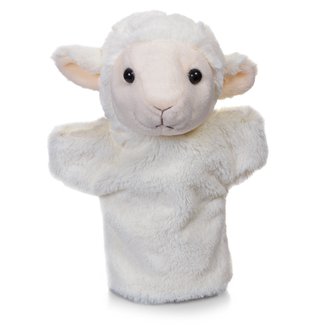
However, I had a bit of a brainwave “Do you have a sheep, or sheep puppet in the classroom?”. One of the teachers went to have a look, and came back with this;

Farm Animal Hand Puppet - SheepThe glove puppet kept one hand out of her mouth, and gave the other hand something to fiddle with. That’s half a solution. “Sing to the sheep”, I suggested. And she did. That could be the other part of the solution.

I’ll let you know next week…

Flying birds divider

Posted in Class Teaching, Early Years | Tagged | Leave a comment

74/100 The Singing Tummy-Button Success

The last post concerned a young lad in the infant class who consistently sang in a high-pitched version of the more usual drone of children who “haven’t found their singing voice”.

"I hates singing!"

A week later, and I was working with the same class, and I had to look to see if he was actually present – his voice was no longer prominent!

The class teachers, who work with me in the music lessons, used various the tricks that I had tried in the previous lessons throughout the week. The main idea was to relate the pitch of the voice to various parts of the body – growling from your shoes, singing low notes from your knees, medium ones from your tummy-button, and so forth, relating the higher notes to eye-level.

I think that younger children respond well to making a physical connection pitch and movement, and this has certainly done the trick for this young man.

birds on a branch divider

Posted in Class Teaching, Early Years | Tagged | Leave a comment

73/100 Sing through your tummy button

I feel very strongly that is it so important to help young children find their “singing voice”. We have just a couple of years to manage this, before the children become aware that they “can’t sing” and become embarrassed to try. They feel so exposed once they start having to join in school productions, sing in class assemblies and even in school assemblies.

I had a new one to figure out yesterday…   Chatting birds

Teaching the Nativity Play songs to a class of infants – year 1 and 2 –  there was the usual enthusiastic approximation to the tune that happens when you just play the demo CD to the children and let them sing along. As I was unpicking some of the errors and working on pitching the notes more accurately, I spotted that one of the girls – let’s call her Mary – was yet to find her singing voice – what used to be called a “growler” in the Bad Old Days. A bit of “sirening” and “swooping” here and there as we went along, while I stood nearby to listen and encourage seemed to go a long way to helping her catch on.

But wait? What was going on at the other side of our singing circle? There was a little chap – let’s call him Richard – who was hugely enjoying the songs and the whole idea of singing, but singing in a high pitched drone! I haven’t come across that before! I ambled over to stand next to him (“so I could watch the children over there”) while I wondered what to do.

I embarked upon a singing break, where we just made funny sounds for a bit. A bit of “listen and copy” – I made really low sounds, “out of my shoes”, middling ones, “from my middle”, higher, pointing to the tip of my nose… lower, “sing from your tummy button”. A few minutes of relating pitch to parts of the body (they liked noses and tummy buttons best) and we were back in unison again.

Of course, when we started the next song, the Mary and Richard had a tendency to revert to their individual “learned” voices, but, I was so pleased to see, managed to find up their singing voice as I called out “tummy button” in between phrases, and stood close beside them, to give them a bit of a lead.

Their “tummy button” voices are not stable yet, but I have hopes that within a few more lessons they will be able to blend in with everyone else.

Leaves

Posted in Class Teaching, Lessons that have happened | Tagged | Leave a comment