Issue 79: Out of The Ark Comic Relief Song

Red Nose Day – Friday 15th March Red Nose Day 2013

I’ve had a great time teaching the Out Of The Ark Music Comic Relief song to several classes last week. It is available, with all the supporting material (Words-on-Screen, lead sheet, score, vocal track and backing track) FOR FREE! Just go to  http://www.outoftheark.co.uk/resources/red-nose-day  and help yourself!

The song is dead simple, and the children love it. After you have all listened to it, my advice is to teach it really carefully first, ensuring that they sing the octave leaps accurately (“like shooting goals in netball/basketball”). As soon as they start adding groovy moves or percussion, they will instantly lose the ability to sing in tune unless you have already got this completely sorted, so if you haven’t nailed the singing first, you will find it difficult to reverse engineer any wrong turns that they make.

Year 1 2:

We looked at the repeating patterns hidden in the song: Chorus, Verse, Chorus, Bridge, Chorus, Verse, Chorus Bridge, Chorus. I wrote this structure up on a white board, and invited one child to put a coloured blob by each chorus, another to use a different colour to highlight the verses, and a third to highlight the “Let’s do something funny”. They then recreated the pattern using those clock-together-cubes that they have for doing sums, and used these patterns as a graphic score to create their own music using body percussion and class instruments.

Recorders:

I wrote out the melody for my more experienced recorder player, just changing the low B in the fourth phrase of the chorus for a D, and transposing it all up an octave for the treble recorders. As they had already learned the song in “singing practice”, teaching them to play the chorus and the bridge was a quick job. F naturals, please! They were playing it from memory by the end of the lesson. We’ll tackle the verse, with its more challenging notes, this coming week.

Ukuleles:

My year 3-4 ukulele Wider Opportunities class started learning chord G last week. This was the perfect vehicle to inspire them to get their fingers round it: The chorus works fine with 8 rapid C chords, 4 Gs, and 4 Cs for each line, with the 4 Gs and 4 Cs repeated at the end. It was also great for differentiation: one group only played C chords, another only G chords, and the most nimble-fingered children managed both. In the bridge “Let’s do something funny for money” we played a single G on each line, swinging our whole arm round like a mad rock band guitarist. I’ll start teaching the verse, next week, and then, we’ll all just sing in the final verse when the melody is transposed up a tone.

Samba:

We learned the song, and then picked rhythms out of the chorus and allocated them to differnt instruments. Whoa! An Instant Red Nose Samba!

Djembe:

As for samba, but played the rhythms in differnt groups on djembes.

Classroom Percussion:

This class clearly suffers from “percussion deprivation”, so we all played the different rhythms on an eclectic mixture of random instruments. This week I’ll encourage them to be more dscrimating about who playes when, in order to instroduce a variety of timbre, and choose which rhythms work better on the instruments.


Posted in Songs, Uncategorized | Tagged , , , , , , | Leave a comment

Issue 78: Welcome to the Jungle

This week was half term for me. Usually that means a day of sleeping resting, a couple of days of frenetic house work, a day of planning, admin, paper work, and maybe half a day of teaching (exam candidates who suddenly realise that time is running out, and maybe a couple of instrumentalists who need an accompanist and plenty of rehearsal time).

It did not go as planned. The rest day, house work days, and planning/paperwork/admin days did not happen due to circumstances well within and well beyond my control. It was one of those weeks where events creep up and ambush you from all sides.

Now it is Sunday evening, the house is a mess, the planning/paperwork/admin hasn’t happened. I did, however, attempt to perform miracles and pull rabbits out of hats for half a dozen students on Friday morning. And, as of now, this week’s issue of the Music Jungle is here again! Two posts on very different YouTube video resources await you. I suggest you find some scrap paper, glue or sticky tape, pen and scissors before you continue.


Posted in The Jungle | Leave a comment

Issue 78: Bach; The Crab Canon and the Mobius Strip

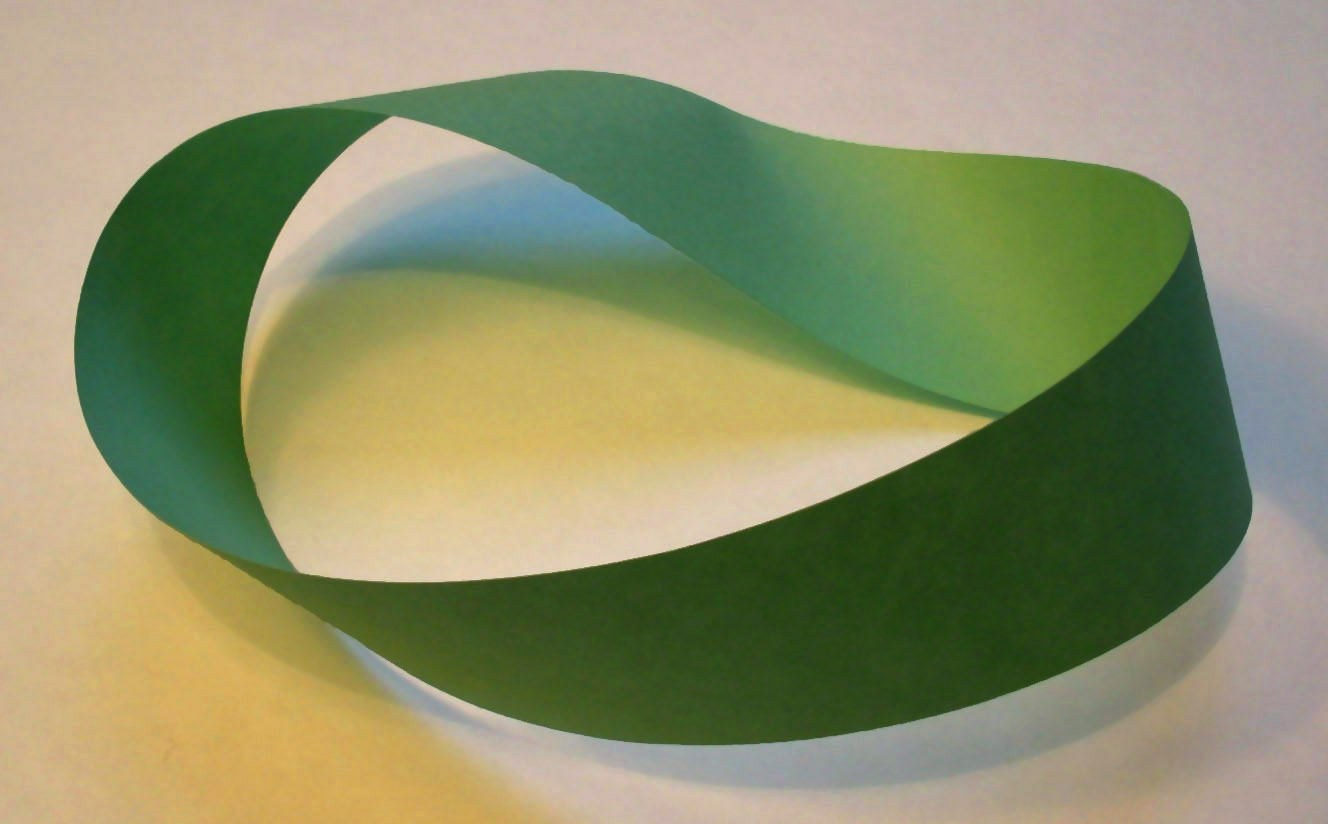
I’ve always enjoyed mobius strips. We used to make them when I was young – a “wet Sunday afternoon” activity in the days before computer games and mobile phones. Well, to be totally frank, in the days before home computers were ever thought of, outside science fiction.

What you do, is cut a strip of paper about an inch wide (2 cm) and a foot long (30cm) and join it to make a loop. The important part is to put a twist in the paper before you join it. If you now start drawing a line along the length of the paper, in the middle, you will find that you go right round “both” sides of the paper before you join up with your starting point. Now, don’t stop here. Take a pair of scissors, and cut along the line you have just drawn. Prepare to be baffled.

File:Möbius strip.jpg

http://en.wikipedia.org/wiki/File:M%C3%B6bius_strip.jpg

If the weather hasn’t improved, make some more strips and experiment. What happens if you start drawing your line one third in from the edge? What happens when you cut along this new line? What if you add more twists befor you stick the ends together?

When you are ready for a rest, watch this video.

https://www.youtube.com/watch?v=xUHQ2ybTejU&feature=youtube_gdata_player


Posted in Listening Music, Resources | Tagged , , | Leave a comment

Issue 78: The Smithsonian Museum Resources

This amazing instrument seems to be a brilliant combination of Junk and Precision Engineering. Watch, listen (turn your sound on!) and marvel.

http://www.youtube.com/watch?v=_uuA7fG58KI

I apologise if you have come across this wonderful video already – but I only discovered it a week ago. However, on further investigation things may not be what they seem;  http://www.snopes.com/photos/arts/musicmachine.asp

Oh well. I still enjoyed watching and listening!

However, in the course of searching on “Smithsonian” to try and track down more information about the machine, I discovered all these, genuine Smithsonian videos – a series of 5, using scientific and musical instruments from the collection:

http://www.youtube.com/watch?v=q8649LlZYsU introduction to acoustics

http://www.youtube.com/watch?v=5Qm8WQgDlSg&playnext=1&list=PL7D5MZ10kPD3eoiSoSBjOcEHV63gHTLRX&feature=results_video introduction to wave models

http://www.youtube.com/watch?v=arP0Jq35dws  tuning forks

http://www.youtube.com/watch?v=KEttRmu2kGk  chladni plates

http://www.youtube.com/watch?v=Rn93ure-Fa8   resonance

There are more, on sirens, resonators, wave models and all manner of things. Just search “SmithsonianAmHistory acoustics” on YouTube, and prepare to become lost in time and space.

Posted in Resources | Tagged | Leave a comment

Issue 77: Welcome to the Jungle

I’ve chosen birds as the picture that ends each post this week; every day as I have loaded the car with instruments for the day (a ukulele, descant and treble recorders, a repinque drum and whistle for samba, and a djembe), the birds have been singing and singing and singing to greet the Spring.

This week I have been meditating, singing the can-can, and wrestling (metaphorically speaking!) with djembe classes…

Posted in The Jungle | Leave a comment

Issue 77: Bach and a Labyrinth

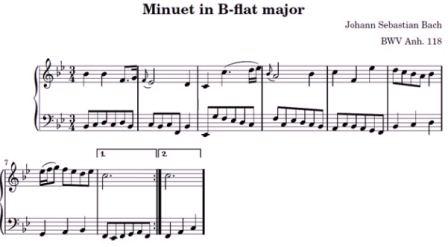
I was teaching a nice little minuet in a piano lesson the other day, and it struck me how much it had in common with walking a labyrinth.

The thing is, unlike a maze, a labyrinth doesn’t have dead ends, and wrong turnings, and deceitful pathways. You enter the labyrinth, and, provided you keep on walking and following the path, you WILL get to the centre, and you WILL find your way out again. You will only go wrong if you cross over a boundary or try and take a short cut.

A lot of Bach seems a bit like this to me: you travel through the minuet, or fugue, or invention in a series of careful loops and swirls to the centre, and then back again. I’m not saying it is boring – more that it can have the same meditative quality that you can experience when you walk a labyrinth.


Posted in The Jungle | Tagged , | Leave a comment

Issue 77: Can you can-can?

I was looking for some more ideas to use with boomwhackers, and tripped across this:

http://toetappingmusic.wordpress.com/2012/03/26/play-can-can-on-boomwhackershand-chimes/

I thnk that the way he has developed the notation is pretty neat – each pitch gets their own sheet, and played on the highlighted beat. What I like is the way the players have to use beat abd rhythm skills to follow the music. I’m going to have a go at using this notation to create some more tunes to play.

Posted in Resources, Uncategorized | Tagged | Leave a comment

Issue 77: A week of djembe classes

I spend a large proportion of the week as a primary school Wider Opportunities music teacher. The instruments I teach vary from year to year. At the moment I am teaching 6 different djembe classes, in different schools. (I also teach 4 different samba classes, 3 ukulele classes and 6 recorder classes…) In the case of the djembe classes, the variety of the class dynamics is astonishing especially when one considers that the class sizes and the ages of the children are so similar.

I am experimenting with how the children address me. Usually, I introduce myself formally, but in two schools I have introduced myself by my Christian name. I noticed that the percussion teachers tend to be more informal, and that the children regard them as some kind of “special”, and slightly exotic visitor. They are a little shy, but obviously feel very daring when they use the teacher’s “real” name. I thought I would see if using my Christian name would give me the same kind of “glamour”, and to my great pleasure, it has.

Having said that, these two classes (and another, where I am treated more formally) have incredibly high standards of class behaviour. I have only met this in one or two other school in among the dozens I have worked in over the years. Both classes have a couple of “characters” in them, but they are easily checked. Usually just a raised eyebrow or surprised glance has been enough to dissuade any inappropriate behaviour.

We get So Much Done each week! In just half a term, and it has been a very short half term, the classes have learned three songs, singing them as a round, or with an ostinato, or with a drumming pattern. We have also played a variety of pulse and rhythm games, and have three djembe pieces in various stages of development.

Two other classes are what I would call “normal” – averagely focused, averagely attentive. I do the same activities, slightly tailored to take into account that we don’t accomplish as much. We spend time waiting for the last person to stop talking, or to be ready to play, or I have to repeat instructions, or we need more “trial runs”. So, in half a term we have done maybe two activities, learned one song, learned one djembe piece, not progressed yet to playing or singing in parts.

One class seems to be entirely composed of individuals. Getting them to listen each other, or to me, is hard, hard, work. There was a brief moment, a couple of weeks ago, when everyone suddenly managed to play together, in time, in unison, in harmony. That felt so good – even the children noticed it.

I am slowly getting this class to come together. This week, we started learning a new song, and I awarded “marks out of 5 for effort” as we sang, by walking round the circle showing each child how many fingers I was awarding them as we were singing together (they all eventually reached 5 out of 5). The same technique of encouragement, directed at each child in turn, while we were drumming, improved everyone’s attention and performance. For this class, an instant and visible response to their effort, like a talent show “clapometer”, seems to be the key to keeping them involved and positive in their response to the activities.

What strikes me is that all the classes are very demanding to teach, for different reasons! The first classes consume a lot of energy as we cover so much ground. The next two classes take a lot of patience and quick-thinking to keep them on track, and prevent them from lapsing into time-wasting. Finally, this last class needs so much energy and input from me just to “bring them to the boil” and keep them going…

Well, I didn’t go in for teaching in order to have an easy life!

Posted in Djembe, Lessons that have happened | Tagged | Leave a comment