Issue 81: Music for falling asleep

Recently I have been woken in the weeny small hours of morning by urban foxes that come and yelp under our bedroom window at three in the morning. We also have a neighbour who works shifts; he is as quiet as he can be, but he he still can’t help waking me when he sets off at horrible o’clock in the morning.

Rather than lie there cursing and moaning, I now reach for my trusty mp3 player. I can operate the controls by feel, as it has proper buttons rather than a touch screen. This means that I can put my ear phones in, switch on, and select one of the following CDs all without turning the light on. I’m asleep within three or four tracks. Works like magic!

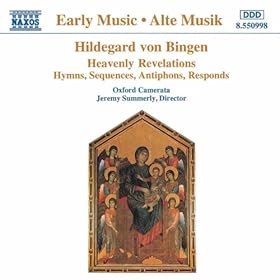
Sometimes I use these CDs to calm a class at the beginning of a lesson. The music on the first CD is so different from anything that the children usually hear that they are caught in its spell.

Hildegard Von Bingen: Heavenly Revelations


Heavenly Revelations – glorious singing, like setting off on a voyage across a gentle sea


Product Details

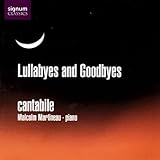
Lullabyes and Goodbyes – luscious, mellow, male voice choir singing arrangements of soothing songs


Product Details

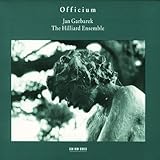
Officium – Jan Garbarek on saxophone and perfect a capella singing from the Hilliard Ensemble. What more can one say?


Product Details

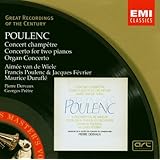
Poulenc concerto for two pianos. There are some loud bits in it, but I enjoy the gamelan sounds, especially in the second movement. The first time I heard it was while my parents were stationed in Indonesia and I was at a boarding school in England; I was almost in tears with longing for home.


Sleep tight, everyone!


Posted in Listening Music | Tagged | Leave a comment

Issue 80: Welcome to The Music Jungle

Did I mention that it’s exam season? Sure I did! Last Saturday I accompanied two young violinists (they passed!). Today (Saturday again) I accompanied another beginner violinist. Last Thursday I spent two half hours teaching Trinity aural at grade 7 and 8 – well out of my comfort zone as I usually teach ABRSM. That was really tough – sight reading the aural test pieces and playing them four times over EXACTLY as written,with  the same notes, articulation, tempo changes, phrasing, dynamics, and then twice more EXACTLY as written but incorporating two or three deliberate changes… That really fries the brain. I could barely string three words together afterwards. Yesterday (Friday) I worked with ten young instrumentalists practising the accompaniments and teaching them ABRSM aural tests.

That’s on top of the usual classroom and private teaching that fills my week. Still, some people have to work for a living, but I just play all day!


This week – One Direction – no, wait, don’t go; listen to what happens when this crowd get hold of their song. Using my Mp3 player to improve a recorder lesson, and finally, hints and tips, based on the past few days, for teaching ABRSM Grade 4 and 5 aural tests.


Posted in The Jungle | Leave a comment

Issue 80: The Piano Guys

Did you know about the Piano Guys? Watch this video…

http://www.youtube.com/watch?v=0VqTwnAuHws

that looked like good fun!

Posted in Piano, The Jungle | Tagged | Leave a comment

Issue 80: Recording Recorder Lessons

OK, so I probably shouldn’t have done it. But I did, and it’s done.

Friday afternoons are probably my least favourite times for trying to teach music in primary schools. The children are a toxic mixture of over-tired from the week’s work, and hyper with the weekend hoving into sight. When you consider that Friday afternoons are when I teach recorders, you can imagine that it is very hard work to engineer the kind of outstanding recorder lesson that one reads about in “how-to-do-it” books. And that is without enduring a Friday of “wet play” all day.

So here’s the scenario: year 4, thirty children, many with recorders, many without, (“Can I borrow a school recorder?” “No, you’ll have to play a pencil!”) Friday afternoon, wet play, the room hot and fuggy and stuffy;

They fidget, drop their recorders on the floor, clank them on the table tops, “accidentally” (huh) blow them, chat, wriggle, put their hands up to go to the loo or because “she said something nasty to me” or because “I’ve hurt my finger” or …

I was beginning to feel desperate. So I took out my trusty little mp3 player, placed it on the front desk and announced that I was going to record a couple of minutes of the lesson. Then I played it back.

They were astounded! We discussed the quality of the playing (dismal), the level of background noise (appalling), the relevance of one child’s interruption because she had caught her leg in the desk, the background chatter (rude and disrespectful)… Please note, the comments in brackets were theirs, not mine!

Then we tried again. Their playing improved, the background racket disappeared, there was no “tootling” and no-one interrupted to tell me about self-inflicted injuries, not least because everyone was sitting still and concentrating. RESULT! We finished the lesson a good deal more pleased with ourselves that when we began.

OFSTED are great believers in using recording and playback as a method of improving music making. Not sure if this is what they had in mind, but it worked brilliantly.

Posted in Lessons that have happened, Recorders | Tagged | Leave a comment

Issue 80: ABRSM Grade 4 and 5 Aural

I’ve been doing a fair bit of emergency aural test teaching recently, mainly for various instrumentalists whose teachers, for various reasons, don’t cover that part of the exam in the lessons. As a pianist, it is fairly easy for me to bash through the aural tests in my piano lessons, but if you are not a confident pianist, and definitely if you are NOT a pianist, it is much harder to teach them.

I know that there are many sites on the web where you can practice your aural tests. I direct my students to www.hofnote.com . I like the way you can try out a small selection of aural tests before deciding if you want to sign up for more. You can hear a complete set of aural tests for each grade on the abrsm website here: http://gb.abrsm.org/en/exam-support/preparation-for-exams/mock-aural-tests/#

The tests at Grades 1,2 and 3 are actually reasonably straightforward and just follow on from each other, increasing slightly in sophistication for each level. However, there is a step change at Grade 4, and the emphasis on singing is much more demanding. Here’s how I go about them:

Test A – singing back a 4-bar phrase, after hearing it twice:

The phrase will always have a sense of being in two parts. The trick is to memorize the first half and get a rough idea of the second part on the first hearing, and then confirm the first part and memorize the second part on the second hearing. Many students will have no problem with this test, but some will find it really difficult. To develop their skills, I’ll start by only asking for the student to sing back the first half of the phrase. I’ll play just the opening, twice, and see if they can sing it back. When that is secure, I’ll play the first part just once, and see if they can sing it back. Then I’ll play the whole phrase, twice, but only ask for the first part to be sung. We’ll talk about what happens in the second part; does it go up, or down, move by step or leaps, return to the starting note, etc. From this point we progress to trying to sing the whole phrase.

Test B – singing notes from score in free time

At Grade 4, the notes used are do re mi, and lah ti do. I’ll leave the music out of sight to begin with, and play the key chord and tonic (doh) for C, F or G (the keys used for the grade) and we’ll sing up and down from the tonic. I find it really useful to add hand signs – I don’t use proper sol-fa signs, but hold my hand flat, palm down, for doh, angles up at 45 degrees for re, and pointing up for me. Point down at 45 degrees for ti, and to the floor for lah. When this is secure, we’ll try going straight from doh to me, or to lah. Be careful that the student sings lah, and not soh, which is much easier to pitch. You can do this using the syllable “ma”, for the note you are intending to pitch, and singing the “missing notes”  – re, or ti – with your mouth closed “mm”. Eventually you sing the missing notes in your head. Finally, work on pitching do re ti do in different combinations. Now it is time to look at the score; notice that the first and last notes are always doh. Use the syllable “ma”  to sing the notes, and if necessary sing the “missing” notes very softly, or silently, to “mm”. Grade 5 is just an extension of the same test, using a greater number of keys, and the notes from soh-below-doh to soh-above-doh.

Test C – listening and answering questions

The student needs to be aware that this WILL be followed by  “please clap the rhythm of this phrase” and “was this in 2,3, or 4 time” questions after they have answered the first two questions. They should therefore try and work this out during while the piece is being played. This means that the clapping part merely confirms their answer rather than complicating things. If their first question is on tempo, they should tap the pulse throughout – any tempo changes should then become obvious. I have had some students who are completely thrown by having to clap the rhythm, and not the pulse, especially if they have struggled to clap the pulse instead of the rhythm for grades 1,2 and 3!

Finally, encourage the students to stand properly, refrain from chewing their fingers or twiddling their hair, and give their answers as positive and definite statements! See if you can persuade them to replace a faint mumbling of “um, er, er, um was that er in um maybe 3-time?” with “That is in 3-time”. Even “I think that is in 3-time” is better than the first answer!

Posted in Aural Tests | Tagged , | 1 Comment

Issue 79: Welcome to the Jungle

Here we are again…

Resources from the V and A museum, music exam season, and Red Nose Day are the topics for this week.

Have a good time browsing…

Posted in The Jungle | Leave a comment

Issue 79: Music Resources from The V and A Museum

I have discovered that you can listen to, and download, a host of short recordings on the V and A website here: http://www.vam.ac.uk/page/m/music/.

For example, secular music through the ages is available here: http://www.vam.ac.uk/page/s/secular-music/

music hall and variety: http://www.vam.ac.uk/page/m/music-hall/

religious music: http://www.vam.ac.uk/page/r/religious-music/

and many other categories. Go explore for yourself! It’s brilliant!

Posted in Resources | Tagged | Leave a comment

Issue 79: Music Exam Season again!

It’s that time of term, when a procession of children and young people beat a path to my door bearing all kinds of instruments, and in all kinds of mental states, and in every different stage of readiness for their forthcoming music exam.

The cat takes one look and leaves home. She is not partial violins, suspicious of cellos, and nearly concussed herself on the cat flap when she heard a french horn for the first time. The trombone also caused an instant panic. She loathes woodwind of all description. In fact the only tme I was ever bitten by any of my cats was when I ventured to play a harmonica when the cat in question was lying on a cushion behind my head. She instantly tried to sink her fangs into my scalp – luckily she couldn’t get a purchase and I was able to retaliate before any damage was done.

What I love about accompanying is that wonderful moment when you and the soloist become a single musical performer. It is a rare experience, but it can happen with a beginner violinist or a Grade 7 flautist, and anywhere in between. I can feel the hairs on the back of my neck all rise, as suddenly we are playing TOGETHER, listening and interacting with each other. Joy!

And in the meantime, you are looking for that magical sentence or idea which will make it possible for the young performer to lift their playing to another level; maybe to understand a tricky rhythm, or find a way to manage a difficult shift, or even just help them to understand what the music is saying, and communicate this with their audience.

This week I discovered how to persuade grade 1 violinists to play Daisy Bell in three-four; calling “THANK YOU” after each dotted minim transformed their time-keeping:

Dai THANK YOU sy THANK YOU Dai THANK YOU sy THANK YOU give me your ans THANK er do THANK YOU  PLEASE THANK YOU I’m THANK YOU half THANK YOU cra THANK YOU zy etc etc etc Mad, but it worked.

By the end of term, I will have accompanied about fifteen children, aged between 8 and 16 years old, playing violins, flutes, clarinets, saxophones and violins, anywhere between grade 1 and grade 6. Fingers crossed for all of them!


Posted in The Jungle | Tagged , | Leave a comment